Sunday, 31 March 2019

Friday, 22 March 2019
Week 32 - Reflect on your learning journey - (Check)
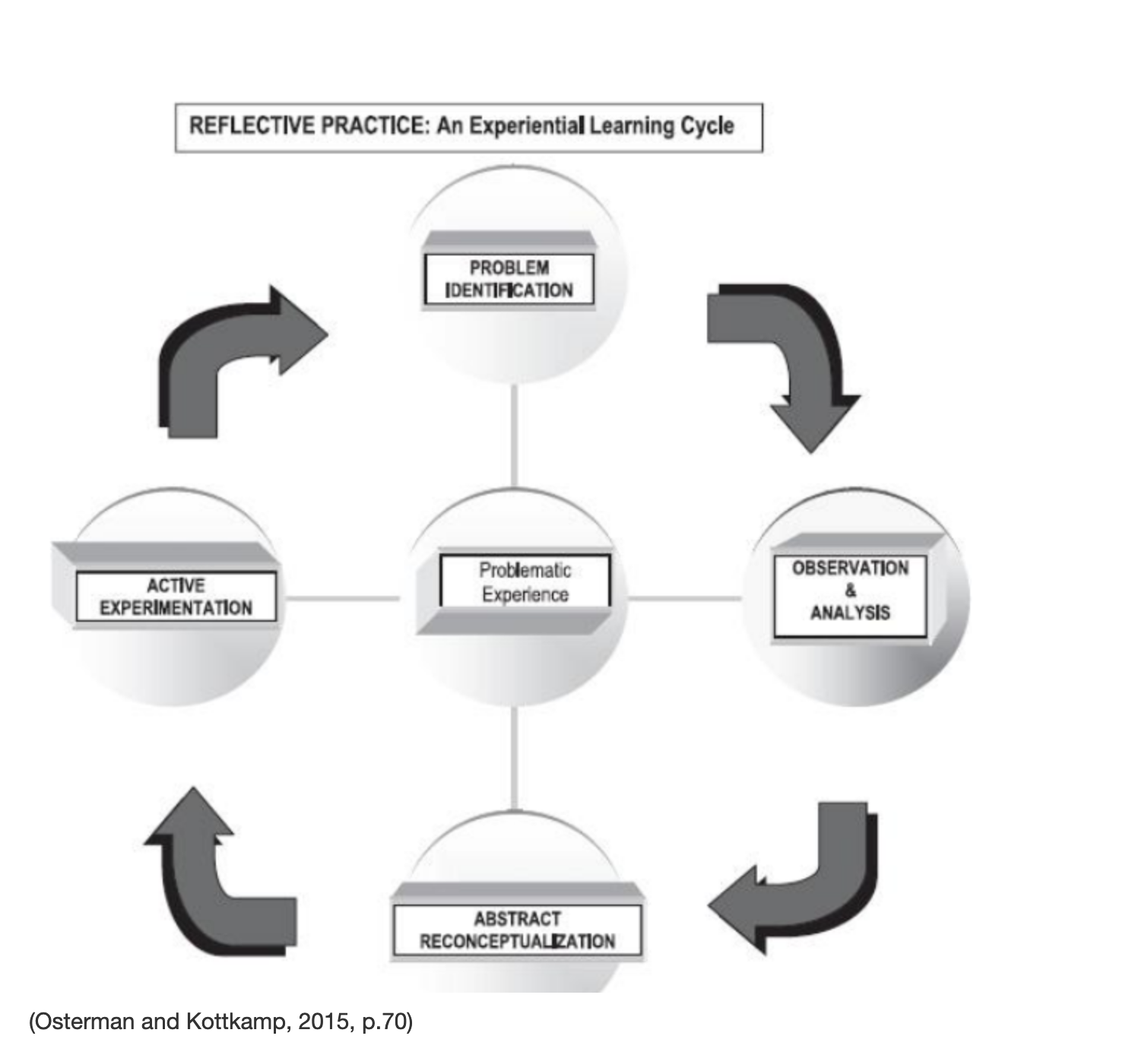
Stage 1:
Prior to starting the MindLab I had preconceived ideas about what collaboration was.
I teach in an innovative learning space where myself and another teacher 'collaborate'
it is said that we do collaborative teaching/learning.
I teach in an innovative learning space where myself and another teacher 'collaborate'
it is said that we do collaborative teaching/learning.
Another rather large problem for myself as a teacher is the fact that research supports
heterogeneous grouping however when this was used in our classroom space it was strongly
suggested from management that we stop and to go back to streaming as we have a very low
achieving year group who they believe would benefit from 'traditional teaching'.
heterogeneous grouping however when this was used in our classroom space it was strongly
suggested from management that we stop and to go back to streaming as we have a very low
achieving year group who they believe would benefit from 'traditional teaching'.
Stage 2: Observation and analysis
What kind of data of the identified problem you have gathered?

Firstly my colleague and I are working at level 5 on the ITL rubric. However when we it became apparent that although we are working collaboratively our students are still on stage 1 where they are required to work in pairs or groups.
Secondly in regard to heterogeneous groups we started the year with such groups. I felt that for
the first time in a very long time I had evened out the playing field for my students. I had students
of mixed ability, gender and nationality in each group. When I introduced a new concept and a child
knew something about it, they became the expert. I saw an genuine interest from different students
in each topic we did. Every year previously when I name my groups children instantly know who
the lower achievers are based upon what group they are placed in and you can hear the kids
ranking themselves. However this year I didn't experience this. Until I had to stream. One little
boy who is in the lower group who had previously been so eager to share his thoughts I could
visibly see his shoulders slump.
Stage 3: Abstract reconceptualization
In regard to collaborative teaching after an in depth discussion with my co-teacher we have
decided that we need to come up with activities that promote collaboration. We will need to
change a lot of the traditional ways we teach. The 21st century skills Voogt & Roblin (2010)
include collaboration as being one of many necessary skills to prepare our students for an
unknown workforce in the future. We need to investigate what this will look like with one
curriculum area before implementing it in all areas of the curriculum. We will need to ensure
that management understand what we are doing and why.
In relation to heterogeneous groups MOE (2017) states that 'we as teachers should
develop a learning-focused culture, a culture that is focused on learning, and is characterised by
respect, inclusion, empathy, collaboration and safety". Which I believe heterogeneous grouping
does. Hattie & Yates (2009) suggests that there is little difference to outcomes between whether
or not you use heterogeneous groupings or not. However he does explain that children who are in
the lower levels usually stay in the lower levels throughout their schooling. I am wondering whether
this is because of the fixed mindset that they develop when they are put in 'the low group'.
Dweck (2016) explains that students from lower socio economic backgrounds have a fixed
mindset and perform at lower level compared to their wealthier peers. Could the connection
between always being in the low group and a having a fixed mindset be connected?
Stage 4: Active experimentation
I have learnt that I still have a long way to go in regard to both implementing collaboration and
heterogeneous groups Fullan et al (2005) found that successful change involves learning during implementation. One of
the most powerful drivers of change
involves learning from peers, especially those who are further along in
implementing new ideas. So visiting successful schools and using eight forces of leading change (Fullan et al, 2005).
Fullan, M., Cuttress, C., & Kilcher, A. (2005). Eight forces for leaders of change. JSD, 26(4).
Growth mindset tempers the effects of poverty on academic achievement.
Claro, S. Paunesku, D. Dweck C, S (2016)
ITL Research. (2012). 21CLD Learning Activity Rubrics. Retrieved from https://education.microsoft.com/GetTrained/ITL-Research
Ministry of Education (2017). Our code, our standards. Retrieved from https://educationcouncil.org.nz/content/our-code-our-standards
Osterman, K. & Kottkamp, R.(1993). Reflective practice for educators.California:Corwin Press, Inc. Retrieved from hhttp://www.itslifejimbutnotasweknowit.org.uk/files/RefPract/Osterman_Kottkamp_extract.pdf
Visible Learning and the Science of How We Learn
Hattie, J. & Yates, G. (2009)
Voogt, J. & Roblin, N. (2010). 21st Century Skills Discussion paper. University of Twente. Retrieved from http://opite.pbworks.com/w/file/fetch/61995295/White%20Paper%2021stCS_Final_ENG_def2.pdf
Tuesday, 19 March 2019
Week 31 - Evaluate Your Impact (Check)
Week 31 Evaluate Your Impacts
Task 1: What is the observed impact after the ‘Take Action’ phase?
Moving into the checking phase of Timperly, Kaiser and Halberts Spiral of Inquiry (2014), I am checking and analysing what I have done and what the observed impact has been.
I initially started the inquiry process to investigate "How the use of robotics and learning with collaborative groups, could be used to promote student engagement and have a positive impact on mathematical outcomes?" my initial hunch was that using robotics would increase engagement which would in turn have a positive impact on on mathematical outcomes. This was based on the fact that I had surveyed the students towards the end of 2018 and they had expressed an interest in robotics. However through informal observations I found that the robots where more of a distraction to the lesson. There was a lot of time taken to get to know how to use the robots, time that could have been better spent doing other tasks. Interesting to note that the robots have been sitting in the class untouched by any child since the last math session. If the students had been really engaged with and wanted to use the robots there would be no way of me being able to keep them away from them. The interest is just not there.
So while there has been an obvious increase in students mathematical outcomes. I can not say that it is because of the use of robotics. I believe it could be because of the urgency that was created by having to complete a set amount of maths sessions. I have also observed the positive impact of the collaborative groups within the class. The students are mixed abilities and during groups sessions there has been a lot of discussion and sharing of ideas and thoughts from all students. I can see an increase in the students willingness to share and having the confidence in doing so. There seems to be less competitiveness. The students are developing a more growth mindset about maths also.
For my next inquiry I will ensure that I only have one area of focus in my big question. I would ensure there are resources available to support what I am wanting to teach. I would also ensure that it is over a longer time frame. I would like to further investigate how working within collaborative groups improves mathematical outcomes for all learners.
Halbert, J., Kaser, L., & Koehn, D. (2011). Spirals of Inquiry: Building Professional Inquiry to Foster Student Learning. Paper presented at 24th International Congress for School Effectiveness and Improvement. Limassol, Cyprus. Retrieved from http://www.icsei.net/icsei2011/Full%20Papers/0053.pdf
Week 30 - Analysing Data
Week 30 - Analysing Data
Efron, S. E., & Ravid, R. (2013). Action research in education: A practical guide. New York, NY: The Guilford Press. (e-copy available in Unitec library).
I set out on this inquiry to find out, "How the use of robotics and learning with collaborative groups, could be used to promote student engagement and have a positive impact on mathematical outcomes?" The data collection that I had originally planned in the "Take Action" phase of Spiral of Inquiry did not quite work out as I had planned. Originally I had planned to create a tick chart (Quantitative) that would show how the students were interacting throughout the lesson, as cognitive engagement is shown by asking questions. However this was just not practical when having to teach at the same time. This now means that we have no data to show whether the students were cognitively engaged in the learning tasks. I did however use a number knowledge as a pre and post test (Quantitative) as a way to collect baseline data and then show progress. To get my data ready to analyse I had to mark and get a percentage.
 |
| Pre test taken February |
 |
| Post test taken March |
 |
| Data collected from the class |
I then had to enter my data into a spreadsheet which makes it easier to view when you are dealing with a whole class.Data that did not relate to my Inquiry question was taken out. Names where then changed to letters of the alphabet so individual students could not be identified.
 A bar graph was created to show pretest scores (blue) and post test score (red)I will use this data to compare the pre test scores and the end results. I will then find by what percentage each child has improved. I have found that while I can see an improvement in test scores. I am unable to compare the data with typical test score and to say that my students performed better using robotics because as Efron and Ravid (2013) explain the methods for interpreting quantitative data; after using the new method, to typical test scores using the existing method. The difference between the two means will reveal whether your students performed better using the new approach.
 Names where then changed to letters of the alphabet so individual students could not be identified.
 A bar graph was created to show pretest scores (blue) and post test score (red)I will use this data to compare the pre test scores and the end results. I will then find by what percentage each child has improved. I have found that while I can see an improvement in test scores. I am unable to compare the data with typical test score and to say that my students performed better using robotics because as Efron and Ravid (2013) explain the methods for interpreting quantitative data; after using the new method, to typical test scores using the existing method. The difference between the two means will reveal whether your students performed better using the new approach.
I feel that there are so many variables present. I don't honestly know if the students improved because of the collaborative groups I put them in or if it was in fact the use of robotics. How do I know that they students increase in test results are not because of the warm up math activities I did prior to the lesson? Or the homework I set? or that their parents were doing extra work with them during the weekend. I don't feel that I have enough quality data to say that in fact "The use of robotics and learning within collaborative groups, could be used to promote student engagement and have a positive impact on mathematical outcomes?" Next time I do an inquiry I will at having a control group. I will take more time in the data collection and I will only have one variable in my big question.
References
Efron, S. E., & Ravid, R. (2013). Action research in education: A practical guide. New York, NY: The Guilford Press. (e-copy available in Unitec library).
Friday, 22 February 2019
Week 28 - Act in Your Professional Environment (Take Action)
What?
An ethical issue that I have faced was in the first week of Taking Action part of the Spiral of Inquiry. In my haste to gather data so I could gain a starting point for my assignment, I made the children to do a maths test on their second day of school. This is not something that I would normally ever do however because of the time restraints of this course I did administer the assessment task. 
So What?
The stress and anxiety I was feeling by having such tight time frames around completing a reflection each week as well as the beginning of the year pressures of starting a class with new students meant I put my needs before the needs of my students.
Requiring the students to do a maths test on the second day of school did in fact cause distress and anxiety to some of the students. Even though I tried to explain that the data was for me to gain an understanding of where they were at and it was to help me teach them their next steps at the end of the day - it was for my assignment. I also feel it could have even disadvantaged some of the students I was hoping to help. The students who I am researching are students who dislike maths and are generally disengaged learners. By putting pressure on these students to complete a maths test has done nothing to increase their engagement.
Now What?
In reflection the students should have been given more time to settle into the class and build relationships with me and their peers. I need to slow down and think carefully about my ethical responsibilities as outlined by New Zealand Association for Research in Education (2010). Mainly The rights and welfare of learners, research participants should take precedence over the researcher's self-interest and avoid unnecessary harm or anxiety. Now that I am in the fourth week of school I look back and realise that I could of and possibly should have asked for an extension on the assignment. In doing this it would have given me more time to get to know my students, build relationships, and cause less stress and anxiety. I will endeavour to put the needs of the learners before my own through the final part of the Taking Action part of the Spiral of Inquiry. For future Inquiries I plan I will take into consideration the time to build relationships.
Reference
Ehrich, L. C. , Kimber M., Millwater, J. & Cranston, N. (2011). Ethical dilemmas: a model to understand teacher practice, Teachers and Teaching: theory and practice, 17:2, 173-185, DOI: 10.1080/13540602.2011.539794
New Zealand Association for Research in Education (NZARE). (2010). NZARE Ethical Guidelines. Retrieved from http://www.nzare.org.nz/portals/306/images/Files/NZARE%20EthicalGuidelines2010.pdf
Thursday, 21 February 2019
Week 27 - Examining your cultural context (Taking Action)
INDIGENOUS KNOWLEDGE AND CULTURAL RESPONSIVENESS AND SUSTAINABILITY
For this weeks reflection I have again chosen to use Rolfs model of reflection.

Culturally responsive pedagogy is a student-centred approach to teaching where each students unique culture both tangable and intangable are recognised and valued at every possible opportunity. Bishop in Edtalks (2012) suggests that a teacher whose pedagogy is culturally responsive challenges the “deficit thinking” of student educability and has agentic thinking, believing that they have skills and knowledge that can help all of their students to achieve.
An aspect of Kaupapa Maori I have implemented is Tino Rangatiratanga - The Principle of Self-determination - I planned to achieve this by assessing the students, sharing their results and co constructing their next steps. This would give the students agency over their learning.
Another Kaupapa Maori aspect is Ako - Students being given opportunities to share their new learning with the group through reciprocal teaching/learning. Hattie (2003) reminds us that it is not the socio-ecomonic differences that have the greatest impact on Maori student achievement but rather the relationships and whakawhanaugatanga, the shared experiences of working together, that is most important.
So What?
Throughout the taking action part of this inquiry I feel I have incorporated both Ako and Tino Rangatiratanga into my teaching practice. After completing the readings this week I am beginning to feel that I have a better understanding of the theory behind why I do the things the way I do. I am beginning to understand that questioning why we do things the way we do, is actually, a positive. This weeks reflection is based on assessment. In this weeks reflection I have looked at the Action Continuum- eliminating white space as a reflective tool.

I have thought about this for my own practice as well as in the setting of my school. I would place my practice at the green stage where 'Indigenous and culturally centred structures and practice are embedded but still colonial in terms of expectations, definitions of success.' The assessment tool used for this research project and throughout the school is a timed 10 minute test. However I have modified how I administer the test to get a true indication of what students know, rather than, what they can show they know in 10 minutes. As I am aware that some students do not respond well under timed pressure and can affect assessment results.
Now What?
Through this reflective process I have discovered that I infact do deliver a culturally responsive pedagogy although this is not embedded throughout the entire school. However in saying that, progress has been made over the last few years to increase everyone's cultural awareness. I will endeavour to be more willing to share how small changes within the classroom setting can make such a difference to all learners. Also spending more time building relationships with the students and discussing with each child what their next steps are and being more understanding of the fact that all students progress at different rates.
Edtalks.(2012, September 23). A culturally responsive pedagogy of relations. [video file].Retrieved from https://vimeo.com/49992994
Hattie, J. (2003). New Zealand education snapshot. Paper presented at the Knowledge Wave 2003: The leadership forum, Auckland.
Wednesday, 20 February 2019
Week 25 - Act on your plan (Taking Action)
The action plan - Week 1
How can the use of robotics and learning with collaborative groups, be used to promote student engagement and have a positive impact on mathematical outcomes?

- Inform senior management during a team meeting before school starts back
- We will inform students
- Parents - newsletters 1:1
- Student baseline data - number knowledge test
So far I have informed the senior management team during our team planning meeting prior to school starting. I have explained to the students that I am doing some research and I have collected baseline data through a number knowledge test which has been marked and shared with the students so they know what their starting point is, which relates to Tino Rangatiratanga - which enables students to know what their starting point is and what their next steps are.
I have highlighted in green the questions they got incorrect and pink the questions they got correct to reinforce this concept.

What I have not done is inform the parents. I will endeavour to do this by the end of this week through the weekly newsletter as well as an individualised letter to the parents of the specific children I am targeting.
I am also meeting with parents next Wednesday at Meet the Teacher evening. I will target specific parents to talk to about my research project.
Step 2: Reflect on the actions
- How do you feel about the actions you have taken?
- I feel that the management team is excited about the area that I have chosen - robotics and maths and improving student outcomes as it is a school wide goal. The students seemed indifferent about the idea of the research. I think this is because I haven't built a relationship with them. I also feel disappointed that I have overlooked informing the parents as whanau is such an important aspect. Katoa website
- What works as expectation and what doesn’t? And why? Building student/teacher relationships should be my first priority. (Ministry of Education, 2014) I would normally never give students a math test in the first week of school. I would wait until I have built a relationship with the students and I know the students feel comfortable and safe in their environment. As a result collecting marking and analysing the baseline data has taken a lot longer to do than first thought.
- I started with the first lesson using Beebots and discovered that 4 of them don't work and some of the batteries are flat and need replacing. Out of the 10 Beebots only half of them worked. So I had to rotate the groups which gave each group less play time to learn how to use the robot.
- What should be done differently? How would you justify this? In the action plan when informing the parents I discussed using meet the teacher evening, newsletters and parent interviews as a way to communicate with parents, however on reflection I feel it would be more personal and build better relationships if I was to write a letter to each parent and discuss their child as an individual rather than as a member of a group. It is also a good way of getting to know the parents on a more personal level. I will also invite the parents in to have an informal chat regarding their child's progress and the process they are going through. Katoa website
Step 3:
Looking at the Spiral of Inquiry and my original 'Hunch' I still believe that I can improve student outcomes in maths using robotics, however I feel it will take longer than the course dates to achieve and I will need to continue long after MindLab has finished to see real improvement. I also need to build relationships with my students as well as parent/whanau throughout each phase of the spiral of inquiry.
Looking at the Spiral of Inquiry and my original 'Hunch' I still believe that I can improve student outcomes in maths using robotics, however I feel it will take longer than the course dates to achieve and I will need to continue long after MindLab has finished to see real improvement. I also need to build relationships with my students as well as parent/whanau throughout each phase of the spiral of inquiry.
Ministry of Education. (2014, April 18). Setting the direction. Retrieved February 10, 2019, from http://nzcurriculum.tki.org.nz/Reviewing-your-curriculum/Setting-the-direction/Know-your-learners
Subscribe to:
Posts (Atom)