Mindlab - Action reflections

Wednesday, 24 October 2018

Digital

Student Agency
Martin (2004, p. 135) characterises agency as "the capability of individual human beings to make choices and act on these choices in a way that makes a difference in their lives”. However, although we might believe that the most transformative learning comes from the learner’s own agency, Lindgren and McDaniel (2012, p.346) underline that “giving students the sense that they have control and the power to affect their own learning is one of the great challenges of contemporary education”.
Tim's To-Do List
In Tim Gander's video (in this week's in-class media), he talks about his to-do list for creating student agency based on his experience working with his own school students prior to joining The Mind Lab.
  • Creating an online learning community and shared meaning for agency
  • Defining the barriers
  • Problem solving how to work around those
  • 20%-25% time for personal projects (from Google)
  • Hacking the internal NCEA assessment standards
  • Using collaborative digital tools
  • Creating a flow chart for the (4) modules
  • Constraints and scaffolding
  • Iterate...
Classroom Focused Agency
A classroom focused interpretation of agency “emphasizes students’ active engagement within richly furnished curricular settings with the support of teachers who encourage student risk-taking and active, self-directed experimentation with the alternative possibilities available in such settings” (p. 144). 
Whānau Agency
The concept of whānau provides the school with a synergy, enabling students, teachers, family and community members to assume a degree of agency over education, to articulate their aspirations, and to develop their capabilities together (Smith, 1995).
Teacher Agency
Re-emphasising the teacher role as central to creating the learning environment - through designing rich tasks capable of facilitating higher order thinking and learning - could help recover the teacher’s sense of agency. (Kimber, Pillay & Richards, 2002). 
In class, we'll ideate how what new opportunities do digital and collaborative tools present for student, whānau and teacher agency.
Kahoot! Pedagogy
In this week's session we included a Kahoot! quiz. Tools such as Kahoot! and Quizizz are designed to be gamified and engaging. According to Icard (2014), students should be enticed by the competitive nature of the game if it is going to be a valuable learning experience for the students. They benefit from using digital games in the classroom by learning how to handle success and failure as well as how to use critical thinking and problem-solving skills.
After the Kahppt! we'll reflect were you engaged when playing it? If so, how do you know? And what is engagement? 
Engagement
Fredericks, Blumenfeld and Paris (2004) proposed a framework for considering engagement that distinguishes between cognitivebehavioural and emotional engagement. It is important to clarify the scope of the term ‘engagement’. Policy discussion has long focused on the negative consequences of disengagement, such as school dropout, and clear behavioural indicators, such as absenteeism and disruptive classroom behaviour. This often overlooks the complexity of engagement, especially the cognitive engagement of students who may be otherwise attending class and behaving well. A short paper form the Australian Institute for Teaching and School Leadership (2016) gives an interesting viewpoint and summary about those three types of engagement in schools - what does engagement mean and how can you measure it?
Shernoff (2013) states that engagement always connotes a relationship, one of involvement to something, and defines it as a heightened, simultaneous experience of concentration, interest, and enjoyment in the task at hand. His definition does not mention school, but refers to engagement in general.
Research indicates that meaningful engagement is composed of academic intensity and a positive emotional response. These can be fostered through clear goals and high expectations for performance, with complex tasks found to be relevant to students’ lives and the community at large.
Engagement and Flow
Definitions of engagement seem to resonate with the concept of flow experience (Csikszentmihalyi, 1990) that we looked at in the context of games. Although the nature of schoolwork can vary, the ideal state of engagement could perhaps be attained in active learning tasks that can support flow. Creating meaningful engagement requires attention to a variety of contextual, instructional, developmental, and interpersonal factors beyond the preoccupation with narrowly defined educational outcomes.
Flow and engagement can be contagious, having the potential to cross over from teacher to student, student to teacher, and permeate an entire group participating in a shared activity. New technologies may also help us to engage students.
References
Australian Institute for Teaching and School Leadership. (2016). Engagement in Australian schools. Retrieved from http://www.acleadersresource.sa.edu.au/features/engagement-in-learning/workshop-1/Handout_4_Engagement_in_Australian_Schools.pdf
Csikszentmihalyi, M. (1990). Flow: The Psychology of Optimal Experience. New York, NY: Harper & Row. 
Fredericks, J. A., Blumenfeld, P. C. & Paris, A. H. (2004). School Engagement: Potential of the Concept, State of the Evidence. Review of Educational Research, 74(1), 59-109.
Icard, S. B. (2014). Educational technology best practices. International Journal of Instructional Technology and Distance Learning. 11(3), 37-41. Retrieved from http://itdl.org/Journal/Mar_14/Mar14.pdf#page=41
Kimber, K., Pillay, H., & Richards, C. (2002). Reclaiming teacher agency in a student-centred digital world. Asia-Pacific Journal of Teacher Education, 30(2), 155-167.
Lindgren, R., & McDaniel, R. (2012). Transforming Online Learning through Narrative and Student Agency. Educational Technology & Society, 15(4), 344–355.
Martin, J. (2004). Self-Regulated Learning, Social Cognitive Theory, and Agency. Educational Psychologist, 39(2), 135-145.
Shernoff, D. (Ed. 2013). Optimal Learning Environments to Promote Student Engagement (Advancing Responsible Adolescent Development). Dordrecht: Springer.
Smith, G. (1995). Whakaoho Whānau: New Formations of Whānau as an Innovative Intervention into Māori Cultural and Educational Crises. He Pukenga Korero, 1(1), 18–36.

Wednesday, 17 October 2018

Week 13

'Cat on Yer Head'
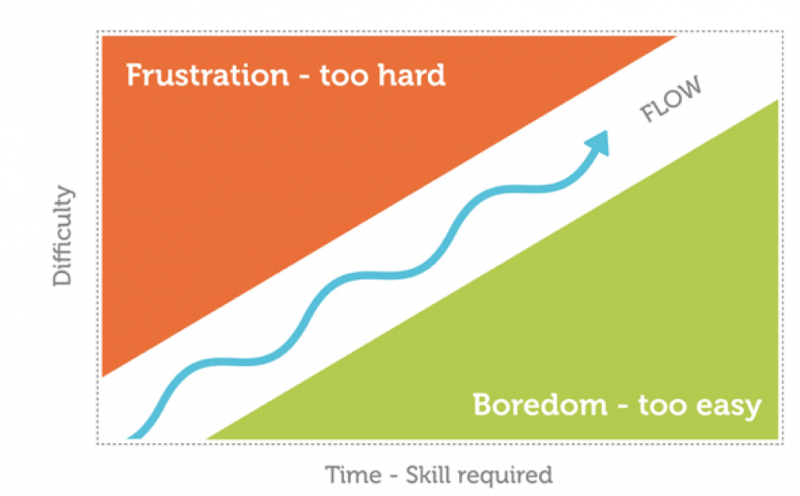
We will start the session by playing a game called 'Cat on Yer Head' (Davis, 2014). We will play it for a short time then think about how engaging it was. We will then discuss the relationships between the difficulty of the game and the skill levels we had to master it - this relates to the idea of 'flow'. According to Murphy (2011) Flow is widely accepted to be one of the fundamental reasons that people play games. It is the essence of games. For game designers, the question is not whether flow is important, but rather, how long you can keep your players in flow. This game is very flexible and it's easy to add, remove or change rules. We will add a new rule that we create in class then discuss what effects that had on flow. 
Clear tasks - understands what they are doing
Feedback - gives a lot of feedback about progressions towards goals
Balanced - attainable goal
Concentration - must be able to concentrate on the game and should avoid distracting the player away from the tasks.


Recently some researchers have begun to take an interest in how group dynamics and collaborative (or competitive) situations within groups affects flow (Madigan, 2015). Ryu, Cui and Parsons (2010) noted that 'social flow in a collaborative learning space might be a key factor in providing the conditions for optimal learning experience' (p.1). If you want to hear how the rules change when groups are involved, you should listen to Madigan interviewing Dr. Linda Kaye on his podcast episode of Psychological Flow.
Flipped Task Discussion - The design principles for flow experience in educational games
According to Kiili, "whenever people reflect on their flow experiences, they mention some, and often all, of the following characteristics: concentration, time distortion, rewarding experience and loss of self-consciousness. During a flow experience, such as during game-play, a person is totally focused on the activity and is able to forget all unpleasant things. Because flow-inducing activities require complete concentration of attention on the task at hand, there are no cognitive resources left over for irrelevant information. Thus, self seems to disappear from awareness during flow. In other words, in flow there is no room for self-scrutiny... during the flow experience the sense of time tends to bear little relation to the passage of time as measured by the absolute convention of a clock. Time seems to either pass really fast or the seconds may feel like minutes. Rewarding experience refers to an activity that is done, not with the expectation of some future benefit, but simply because the doing itself is interesting and fun". Therefore the characteristics of a flow experience are:-
  1. Challenge – The challenge level of the game was appropriate for me. It was neither too challenging nor too easy.
  2. Clear goals - I understood what I needed to do and achieve in the game. Thus, I think that the goals were clear for me
  3. Feedback - The game provided me with such feedback that I was aware how I was performing. I could really perceive the consequences of my actions.
  4. Playability - The user interface of the game was easy to use. I could easily find all the necessary functionalities and information.
  5. Sense of control - I felt that it could be possible to perform well in the game. Training could improve my skills to master the game.
  6. Rewarding experience - I really enjoyed the playing experience. It was so gratifying that I want to capture it again for its own sake
  7. Concentration - I was totally immersed with playing the game. External factors did not disturb me and I could keep my mind on the game events.
  8. Loss of self-consciousness - During playing I was not concerned with what others may have been thinking of my performance.
  9. Time distortion - During playing the time seemed to pass very fast - suddenly the playing session was almost over. 
Educational Game Model
According to Amory (2007), Educational computer games should:
  • Be relevant, explorative, emotive and engaging
  • Include complex challenges, puzzles or quests
  • Be gender-inclusive and non-confrontational
  • Provide appropriate role models
  • Develop democracy and social capital through dialogue
  • Support authentic learning activities
  • Support the construction of tacit knowledge
Educational games need all the usual qualities of games, plus they should not contain any socially undesirable features (racism. sexism, violence, etc) but provide positive models, plus they have to have some embedded pedagogy. Maybe this explains why successful educational games are so hard to create.Taking account, and including, all these features into a game is difficult. One good example that tries to include many of these elements is a Maori language game created by Tyne Crow -Kupu Hono.
You can try out a basic demo of Tyne Crow’s Kupu Hono Maori language learning game that is an example of a learning game designed for mobile devices that uses a virtual game world.
Game Design in Education
A starting point for game design in education could be a 'problem space':
"Games and simulations, digital or non-digital, are also problem spaces. They are constructed with particular constraints and affordances that shape what the player can experience as “the game”." McCall (2012)
"By being conscious of the ways in which games and simulations construct a particular problem space for learners, teachers can pay attention to the strengths and limitations of any particular game, and consider what additional ideas and facts need to be explicitly taught, or reflected on, outside the game experience". Bolstad, R. (2017).
In Class Task - Mindomo and Mind Maps
Use mindomo.com to summarise your ideas as an mindmap. The instructions for using mindomo mind maps are in the media section at the bottom of this page. 
Ideate a 'problem space'
"By being conscious of the ways in which games and simulations construct a particular problem space for learners, teachers can pay attention to the strengths and limitations of any particular game, and consider what additional ideas and facts need to be explicitly taught, or reflected on, outside the game experience. " (Bolstad, 2017).
Examples of 'problem spaces' might be:
  • History Events - Civil Rights
  • Science - Climate change
  • Student Self Management
  • Literacy - for a particular target group
Then add your chosen problem space to the middle of your mindmap and identify 3 or 4 game mechanics from Marczewski's Game Mechanics Table to ideate further.
Include key learning that you want to occur.
Give and receive feedback on your presentations in the G+ community 'In class tasks':
  • Chosen problem space?
  • What game mechanics have they used?
  • What learning are they wanting to encourage?
  • Something about the educational game criteria?
Keep in mind that these are ideas you could propose to your students, we hope they will develop the idea and game(s) further with you.
Game creation tools
One of the tools that could be used with students to create their own games is Gamefroot
  • GameSalad includes ready-to-use projects, activities, tutorials and assessments to meet STEM initiatives.
  • Yoyo Games Allows users to make 2D games with the GameMaker: Studio game engine is easy. No code or programming required.
  • Gamestar Mechanic uses fun, game-based quests and courses to help you learn game design and make your own video games!
  • Flow lab Visual game creator, right in your browser.  No coding needed - Export apps for iOS, Android & Windows
References
Amory, A. (2007). Game object model version II: a theoretical framework for educational game development. Educational Technology Research & Development, 55(1), 51–77
Bolstad, R. (2017). Playing for peace: Complex role-play gaming in high school history A case study. New Zealand Council for Educational Research.
Davis, R. (2014). Cat On Yer Head. Playniac Ltd. Retrieved from http://www.catonyerhead.com/
Kiili, K. , de Freitas, S. , Arnab, S. and Lainema, T. (2012) The design principles for flow experience in educational games. Procedia Computer Science, volume 15 (4th International Conference on Games and Virtual Worlds for Serious Applications (VS-GAMES’12)): 78– 91. http://dx.doi.org/10.1016/j.procs.2012.10.060
Madigan, J. (2015). Podcast 3: Psychological Flow. The Psychology of Video Games. Retrieved from http://www.psychologyofgames.com/2015/05/podcast-3-psychological-flow/
Marczewski, A. (2016). GameThinking – Differences Between Gamification & Games. Gamified UK. Retrieved from: http://www.gamified.uk/gamification-framework/differences-between-gamification-and-games/
McCall, J. (2012). Historical simulations as problem spaces: Criticism and classroom use. Journal of Digital Humanities, 1(2).
Murphy, C. (2011). Why Games Work and the Science of Learning. In Proceedings Modsim World 2011. Retrieved from: https://ntrs.nasa.gov/archive/nasa/casi.ntrs.nasa.gov/20130008648.pdf
Ryu, H., Cui, J. & Parsons, D. (2010). Raising the Bar of Challenge with Collaboration: Social Flow in Mobile Learning. Proceedings of 9th World Conference on Mobile and Contextual Learning (mLearn 2010), Malta, (pp. 240-247). Retrieved from http://davidparsons.ac.nz/papers/Raising%20the%20Bar%20of%20Challenge%20with%20Collaboration%20Social%20Flow%20in%20Mobile%20Learning.pdf
Salen, K. (Ed.) (2007). The Ecology of Games: Connecting Youth, Games, and Learning. Cambridge, Mass.: MIT Press.

Gamification Year 13

Gamification
Gamification is a concept, which is not exclusive of education. Some researchers generically defined it as “the use of game design elements and game mechanics in non-game contexts” This broad definition has been further refined to reflect the most common objective of gamification: increase user experience and engagement with a system. It is important to note that Games and Gamification are two different things! (Deterding, Dixon, Khaled & Nacke, 2011).
Game Mechanics
These have the potential to influence follower behaviour. Seth Priebatsch's (2010) flipped activity video, lists 4 game mechanics.
  • Appointment dynamic
  • Influence and status dynamic
  • Progression dynamic
  • Communal discovery 
Game mechanics are most effective when they match a user's preferences. The flipped task with this video is to consider how these mechanics can influence follower behavior and to add ideas to the shared padlet tinyurl.com/4gamemechanics.
Gamification User Types
The point of considering User Types is to give gamification designers a simple framework to think about the types of people they may have using their system.
This hexad scale was developed by Marczewski (2013).
It is essential to keep in mind that people can not be broken down into simple categories, they will likely display most if not all of these traits in varying degrees. … Over time the user type would most likely change... because as people master or get bored of certain types of playing, they evolve.
Find out how user types relate to you by completing the User Type Test at: https://gamified.uk/UserTypeTest2016/user-type-test.php 
User types vs follower types
Depending on the motivations of user types, badges can serve different functions such as goal setting, instruction, reputation, status/affirmation, and group identification (Antin & Churchill, 2011). Follower Types and their different motivations can also be considered (Kelley, 1988).
Gamify your Practice for Digital 2 / Leadership 2 Assignment
Consider:
How might you classify your user/follower types in your leadership of your innovation?
- Did you / could you use any aspects of gamification (Flow, User Types, 4Keys 2Fun, Game Mechanics, Problem Spaces) in your leadership of your change initiative?.

References
Antin, J., & Churchill, E. F. (2011, May). Badges in social media: A social psychological perspective. In CHI 2011 Gamification Workshop Proceedings (pp. 1-4). New York, NY: ACM. http://gamification-research.org/wp-content/uploads/2011/04/03-Antin-Churchill.pdf
Deterding, S., Dixon, D., Khaled, R. & Nacke, L. (2011). From game design elements to gamefulness: defining gamification. In Proceedings of the 15th International Academic MindTrek Conference (pp. 9–15).
Kelley, R. (1988, November). In Praise of Followers. Harvard Business Review. Retrieved from https://hbr.org/1988/11/in-praise-of-followers
Marczewski, A. (2013). Using the Gamification User Types in the Real World. https://www.gamified.uk/2013/12/09/using-gamification-user-types-real-world/
Marczewski, A. (n.d.). Gamified UK User Type Test. Retrieved from https://gamified.uk/UserTypeTest2016/user-type-test.php#.WpDGxaiWbIU
Priebatsch. S. (2010). Building the game layer on top of the world. Retrieved from https://www.youtube.com/watch?v=Yn9fTc_WMbo  

Monday, 8 October 2018

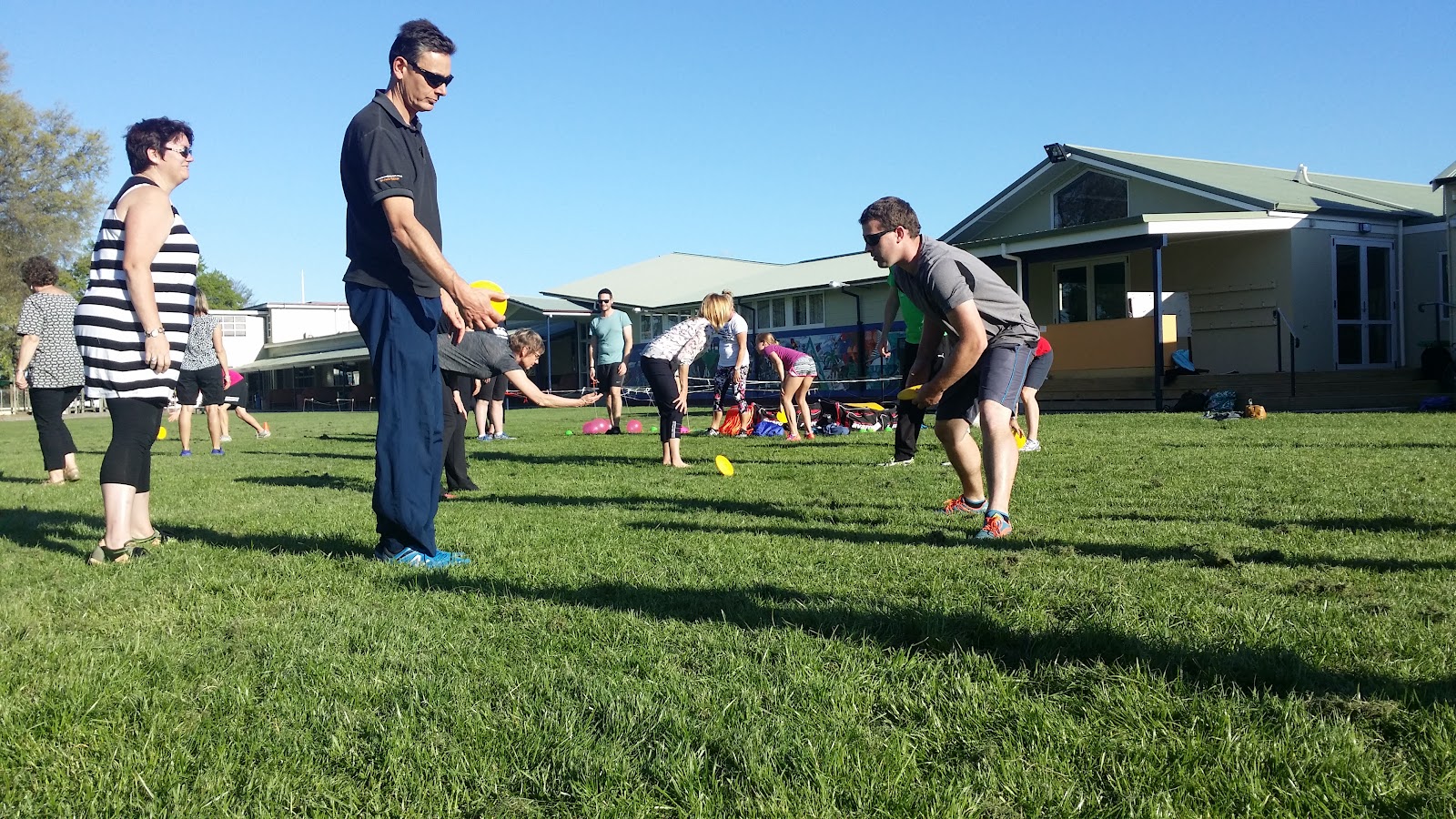
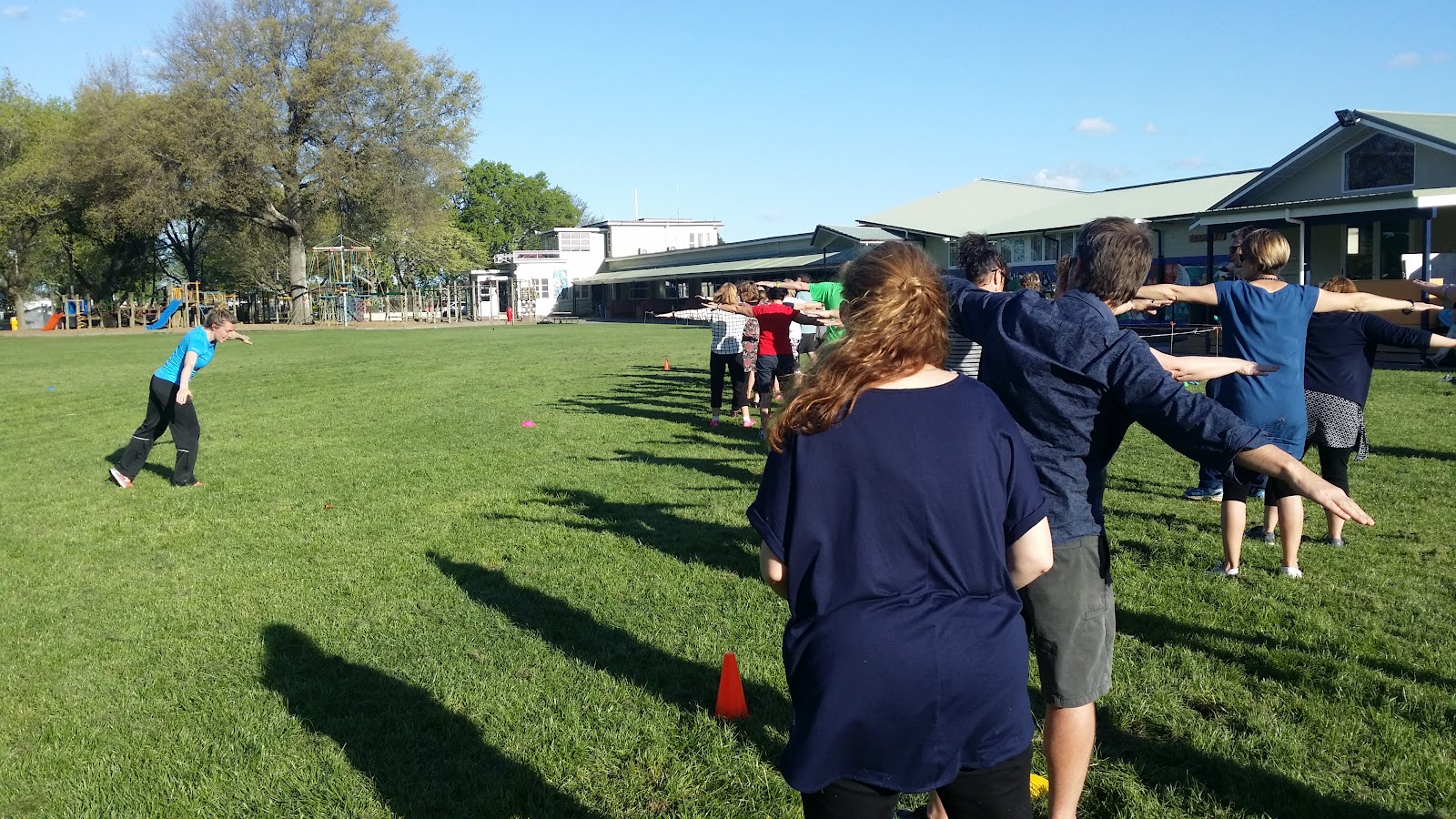
Athletics

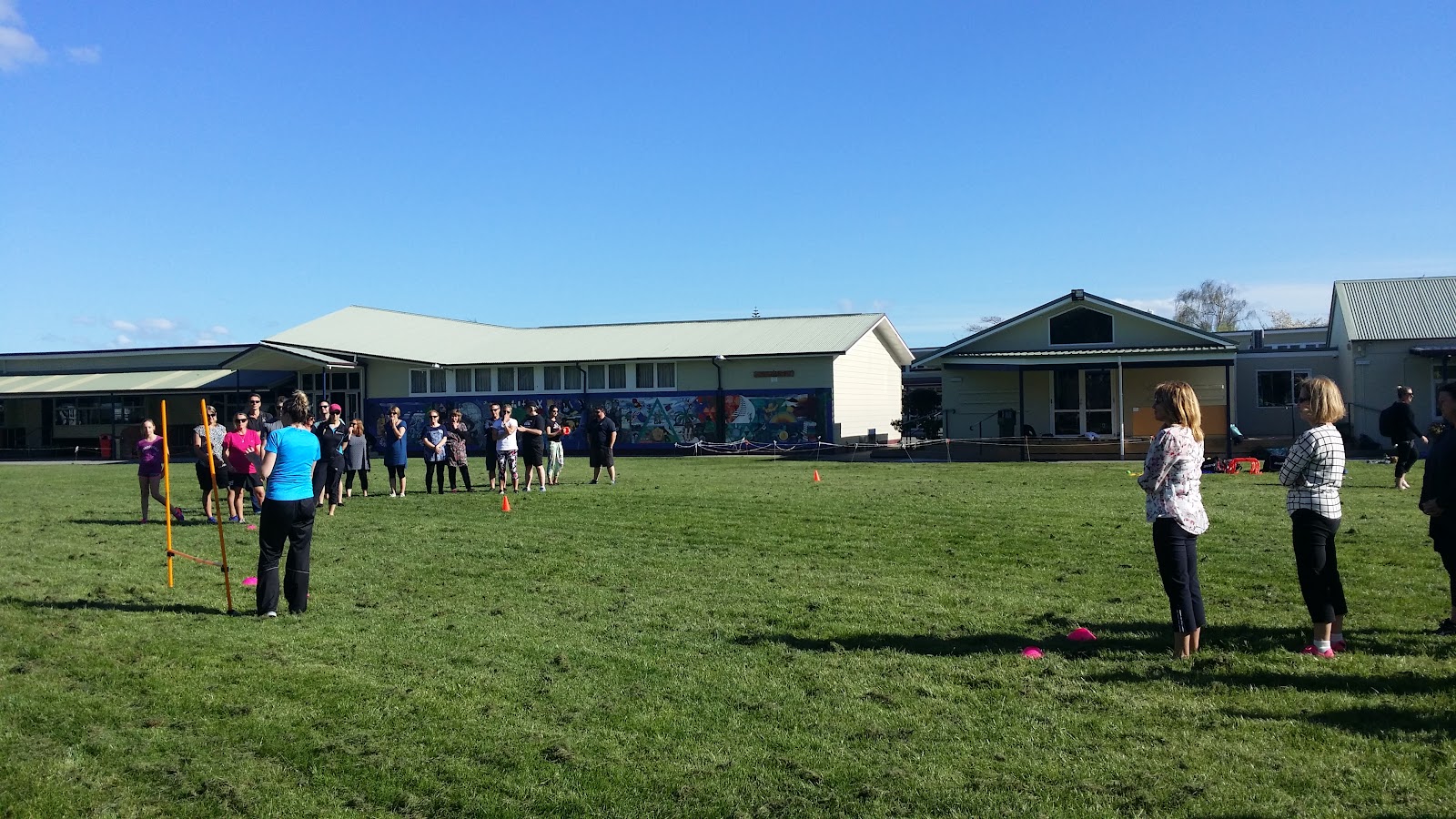
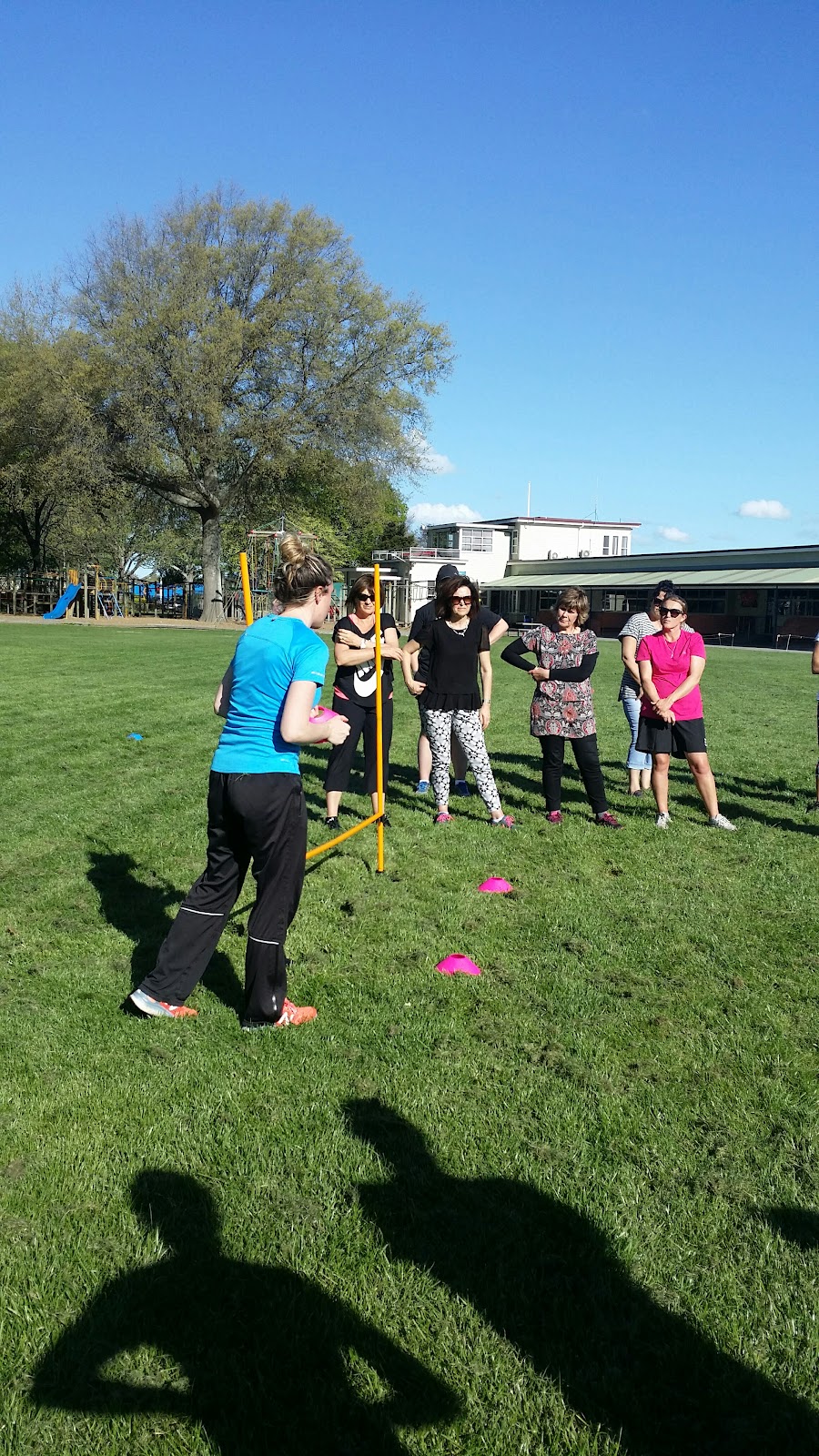
Emma PD 29.08.17


Sessions..
-game warm up with skill included.
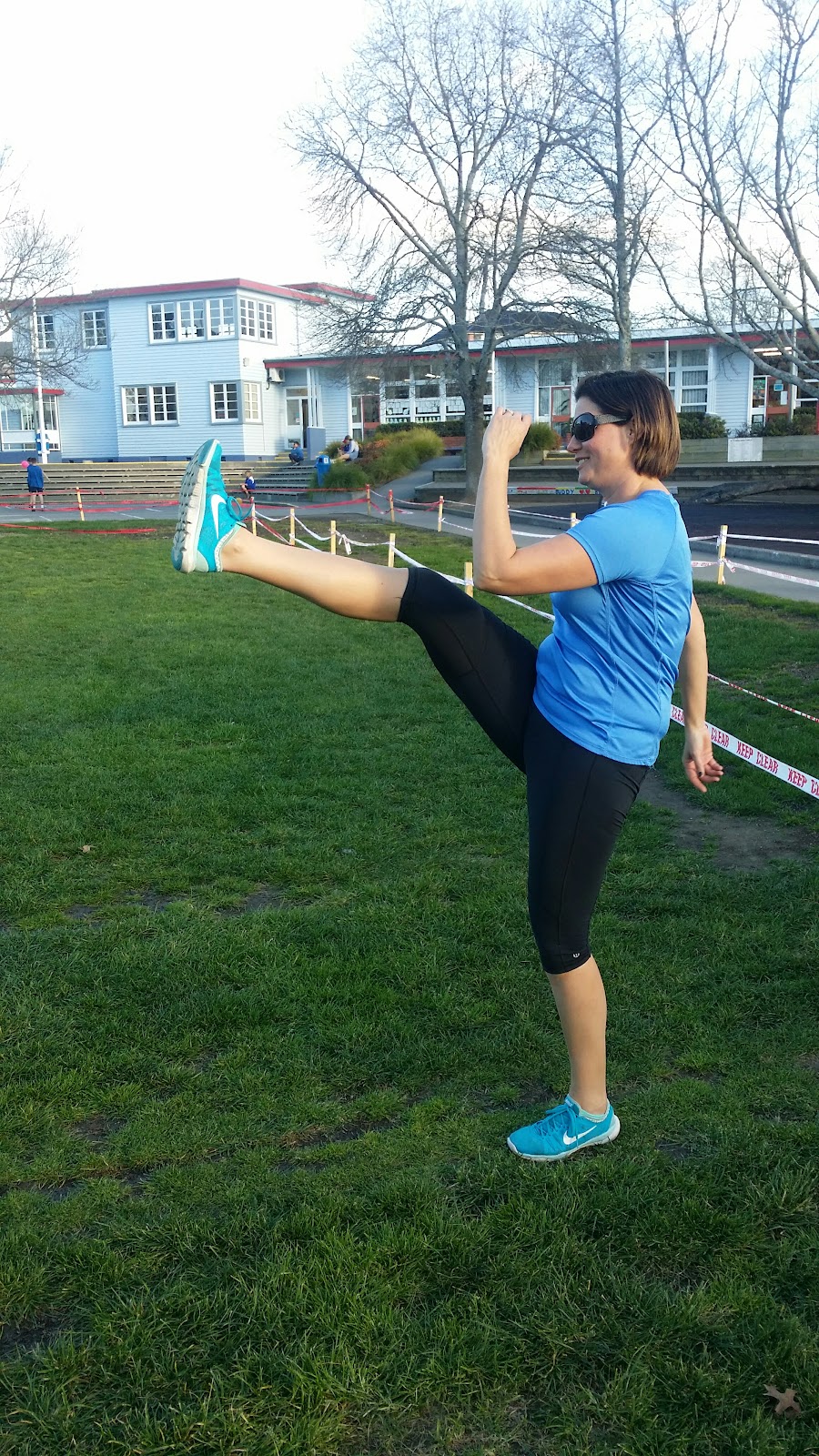
-mobility (leg swings, shoulder rolls etc)
-skill
-implement skill
-warm down
-stretches


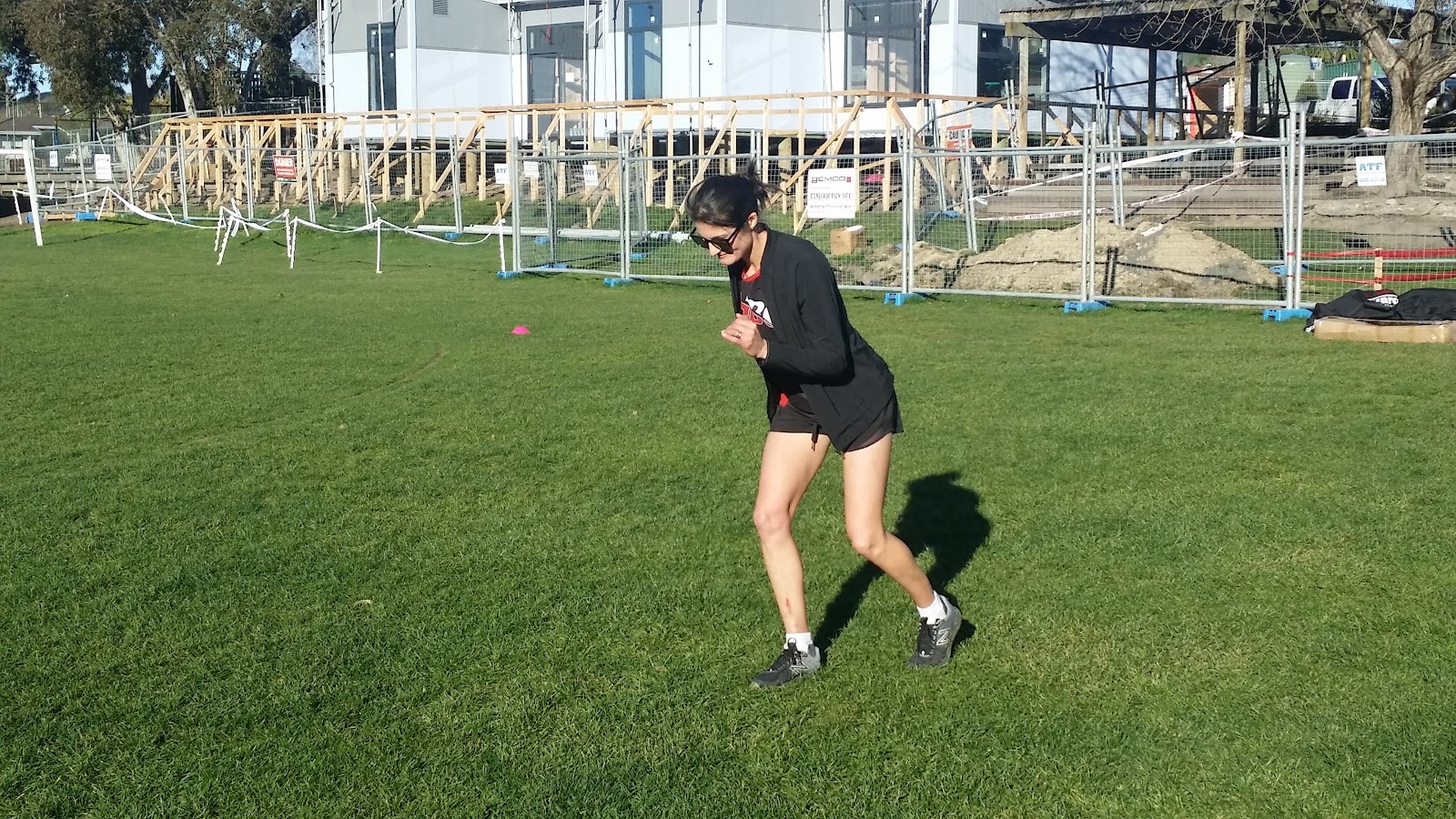
Running


Straight vs zigzag.. children to critique each other.
Which was faster?
Ome hands behind back one hands in front. Which was easier?
Run heavy vs run light!
Long strides vs short
Head- still straight
Torso- upright, slightly forward. Michael Jackson tilt
Pelvis comfy
Arms- 90 deg
Running swing in shoulders (back down and relaxed)
Hold crisp in fingers vs clenched fist


Marching..
Arms bent, arms op knee, cheek to cheek. Drum behind them hit drum with bent arm.
Shouldn't hear feet on ground.


Sprint.. on ball on feet
Long distance.. slightly back further.


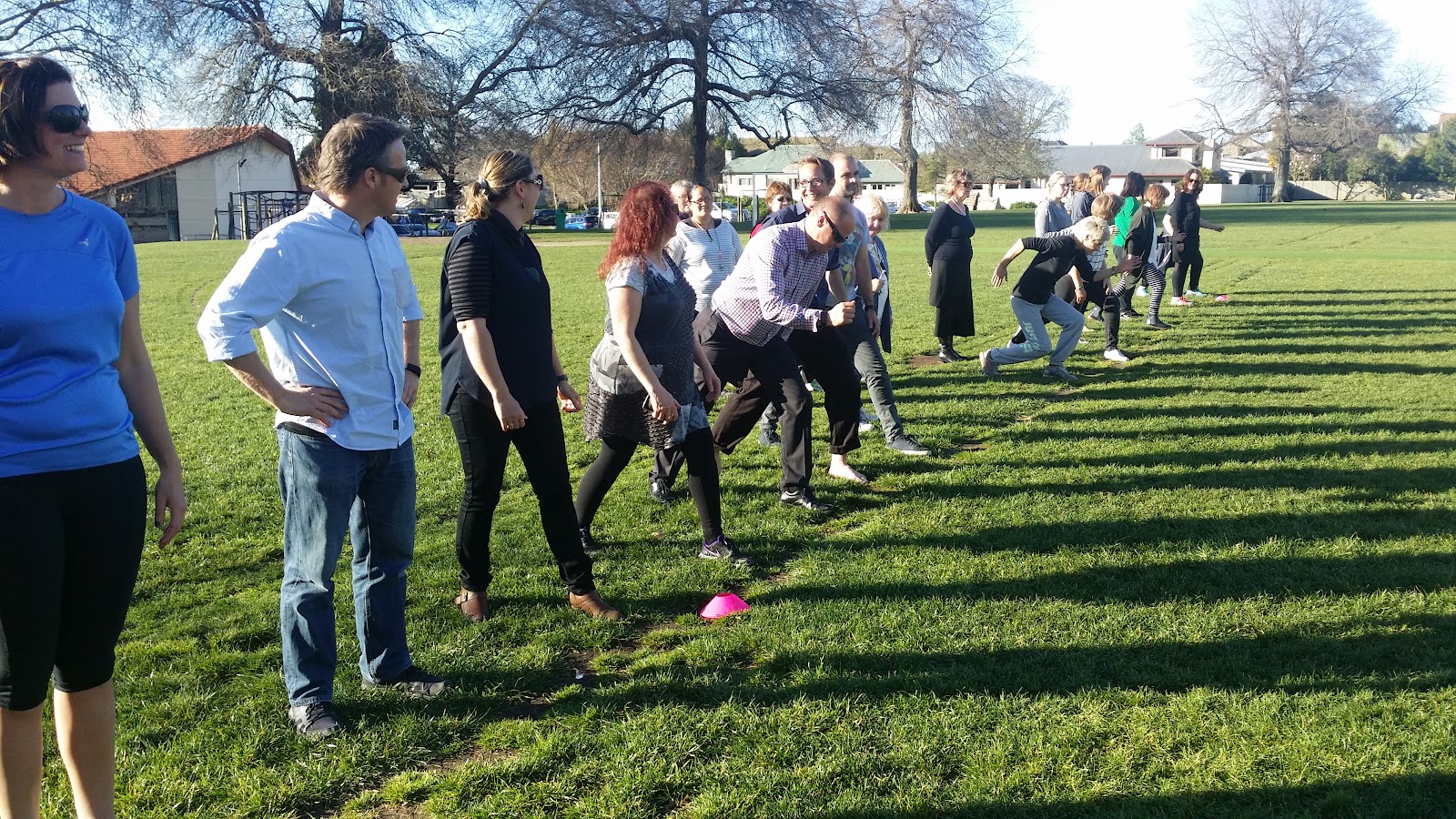
Starts


Take your marks, set, (stand behind the runners) clap..


Make children practise starts on both sides.


Relays…


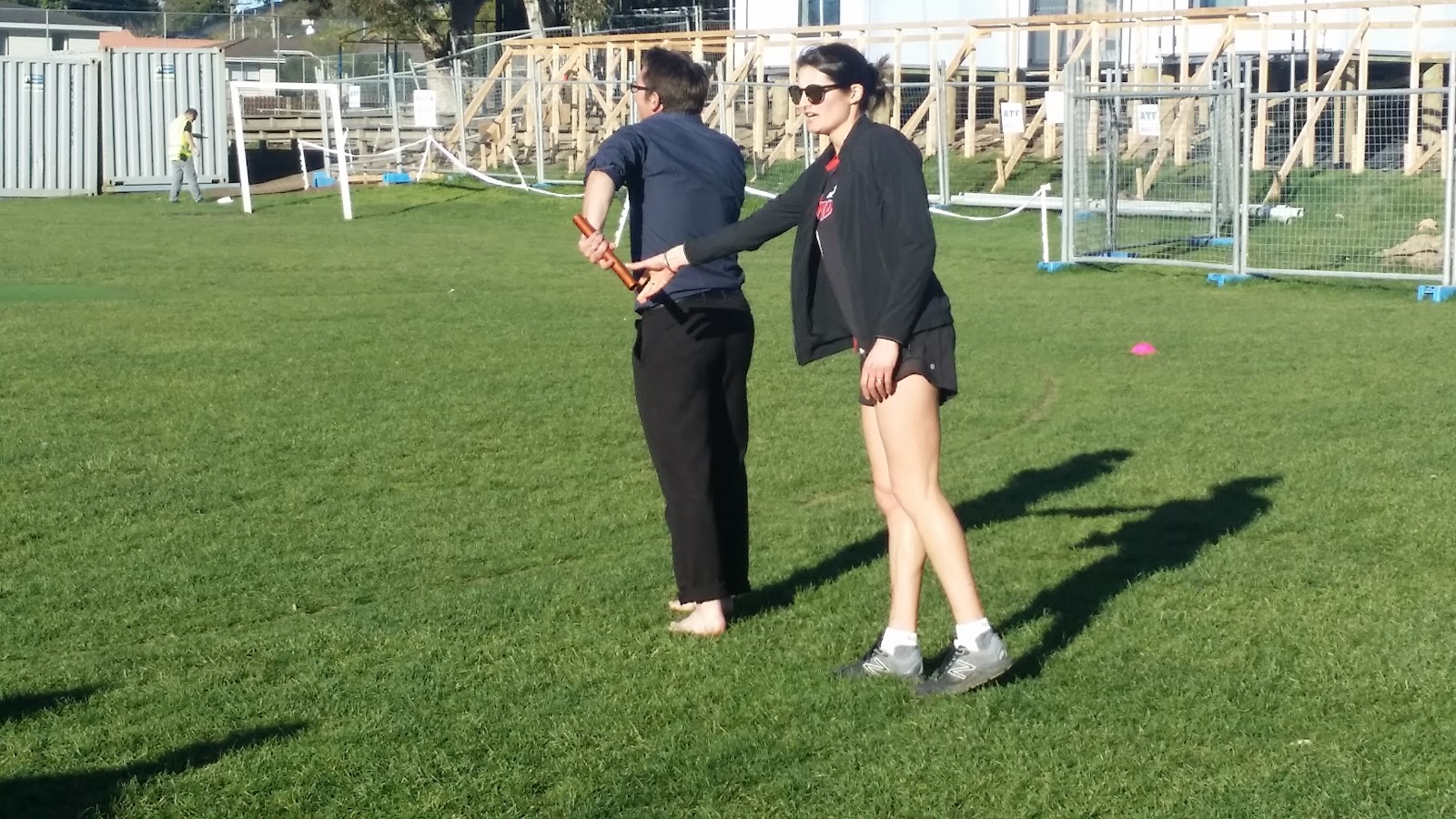
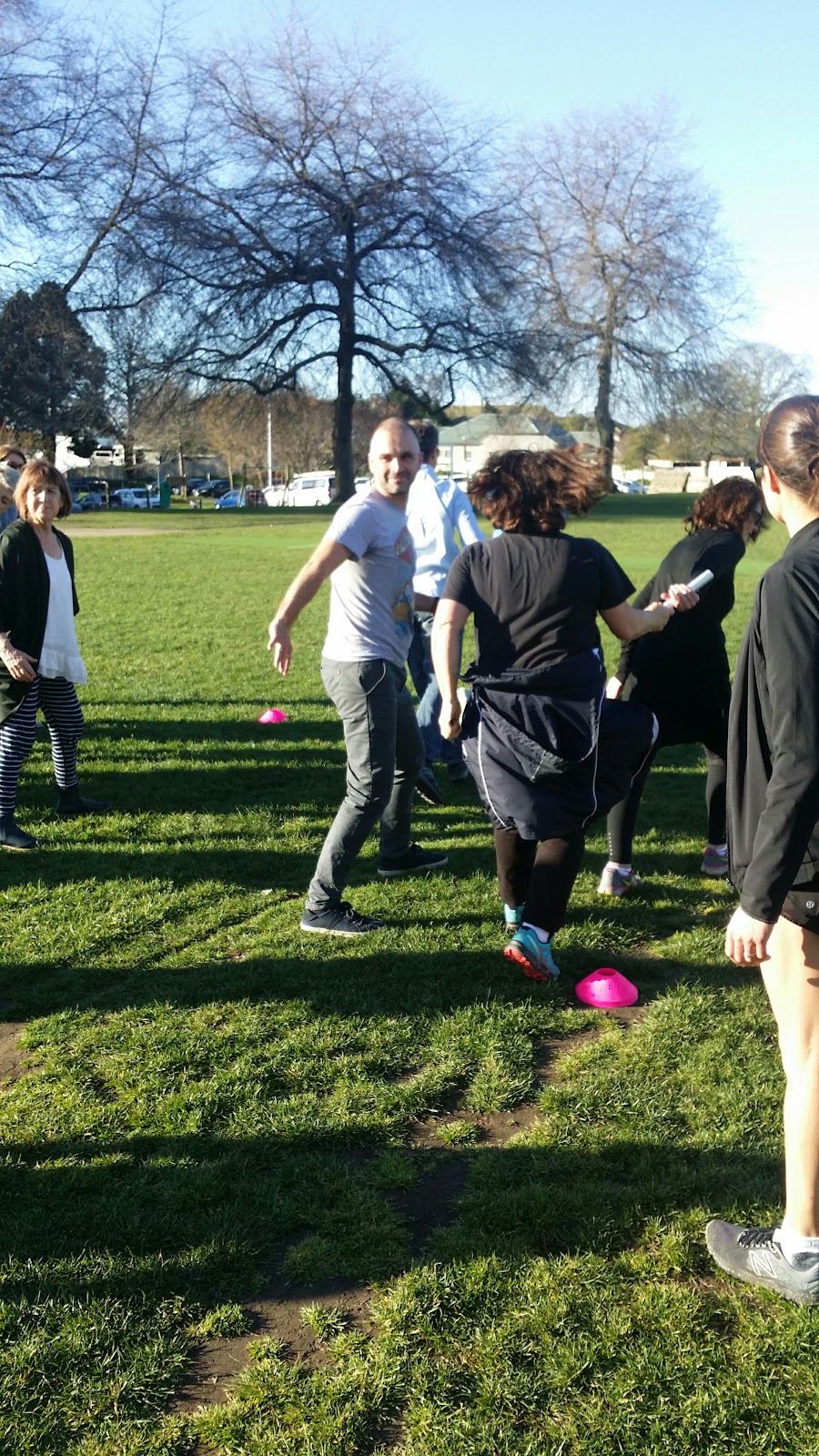
Push batton -  not place it up or down


Groups of 4.. running arms. One two three hands.. push batton. Through team.
Last person drops batton and team walks forward and go again.


Set up a coned change over area.


Don't look behind!!!! Arm back, fingers down, push into their hand at top.


Jumping..


Land bent knees on a motorbike.


Get kids to jump forward straight legs.. then bent legs land on motorbike.


Jump from 2 feet.. hands behind back. Bent knees and landing. Step back this time use arms.
Difference? Which is better? Get kids to try it and see which is better.


Take a step then jump off one foot land on two feet. Is it easier to land with feet wider or close together?


Get kids to take off on both sides..


Station 1: standing jump
Station 2: 1 step then jump
Station 3: run up then jump


Hoops, skipping rope and a river jump different widths,


Practise the drive up. Standing jump for height. Arms swing through then drive knee up.
Land on 2. Knee should get up to hip height.
Have a target to jump up for height.. jump to reach.


Kids should be sissoring up to their arm pit height and then they can flop.
Use a line.. scissor one way then back the other.


Use hurdles to get kids practising over.


Hurdles should fall forward when using them correctly.


Practise with a line of hurdles.. children zig zag over the hurdles practising the scissor.


Triple jump


Hop, step and jump


Warm up- hopscotch.


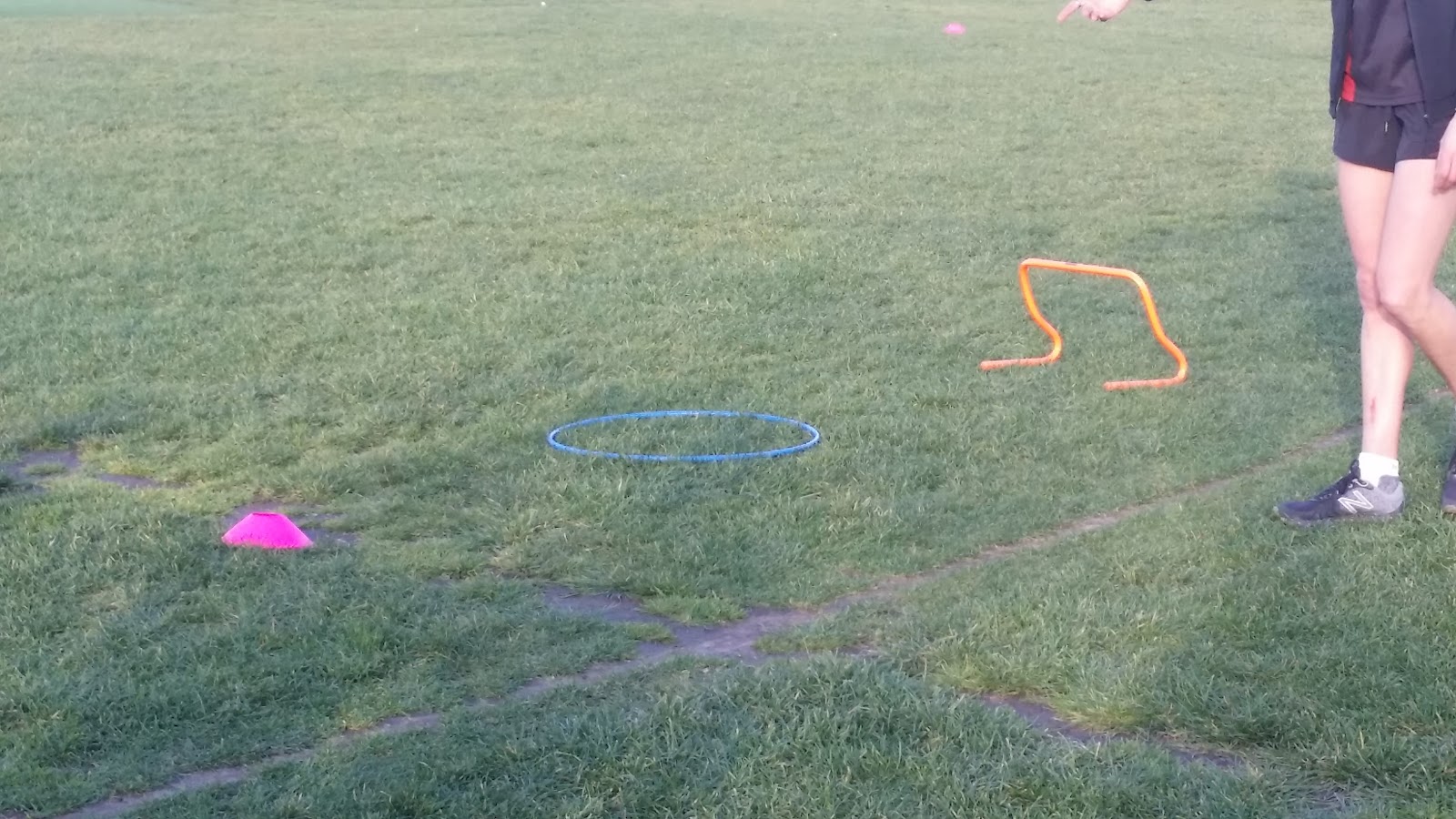
Hop to cone, step to hoop then jump over hurdle. Walking first then get them to run.


Good to teach, bit of brain dev and then doesn't come in until high school.


When jumping head needs to be up and looking forward.


Step and jump then high five.. good way to get kids get their heads up.


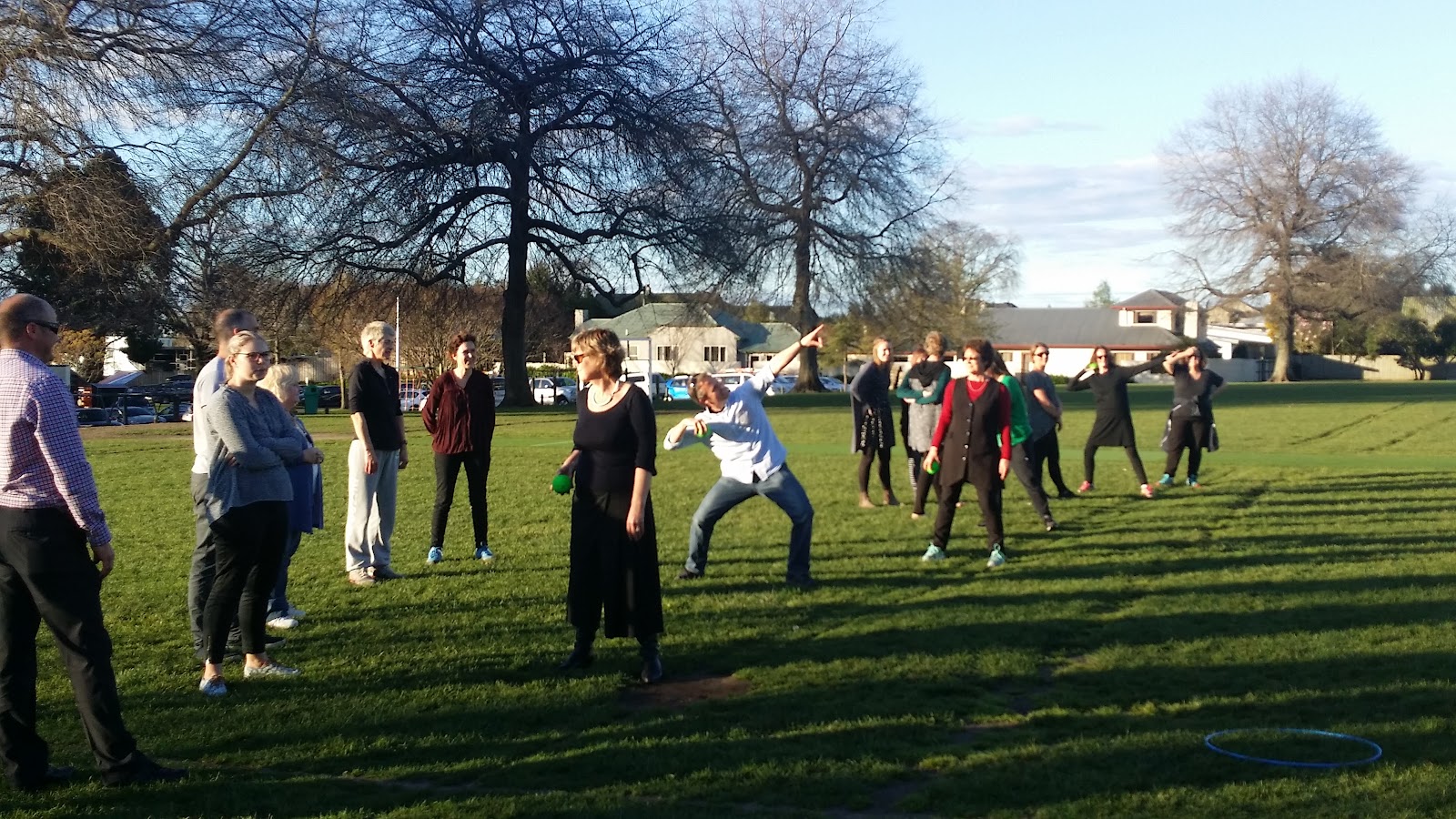
Coach and athlete.. in pairs. One is coach the other is athlete. Coach watches then gives feedback.


All must teach a j run up (3 steps wide x 3 steps long). Run round the cone and then up and over.


Throwing:


Throwing is a push pass.. don't lock out arms. Arms need to be straight.
Chest pass straight arms then overhead to overhead. 1 hand push next..


Side on to teacher on the line.
Back foot weight needs to be.. practise weight transfer from back to front.
Practise both sides.


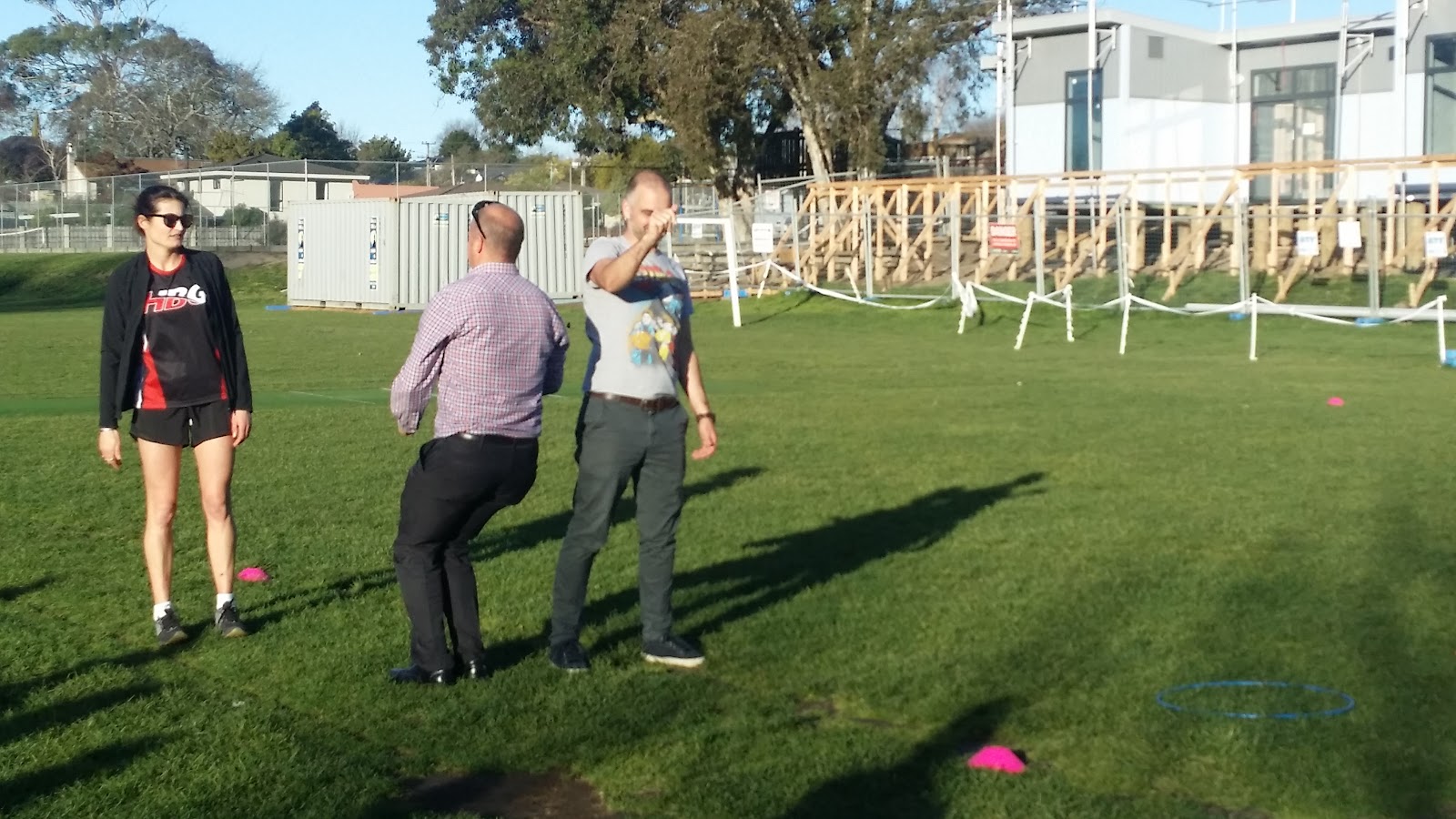
Shot put.. pick up in fingers (dirty fingers & clean palm), shot to neck (dirty neck), elbow up
(lift both arms up to 180), weight back.


Safety!!!! No one out the front. Throwing cone and then a safety zone. Keep everyone behind in
safety zone until called forward. The thrower never retrieves it. In an event they arent aloud to
walk out the front of throwing area so don't send the thrower to retrieve. “thrower ready,
throw when ready.” Wait for teacher's call.
Check time hips twist then follow through with shot. Look behind until turned and push.


Shot shouldn't leave neck.. disqualified if there is light between neck and shot.


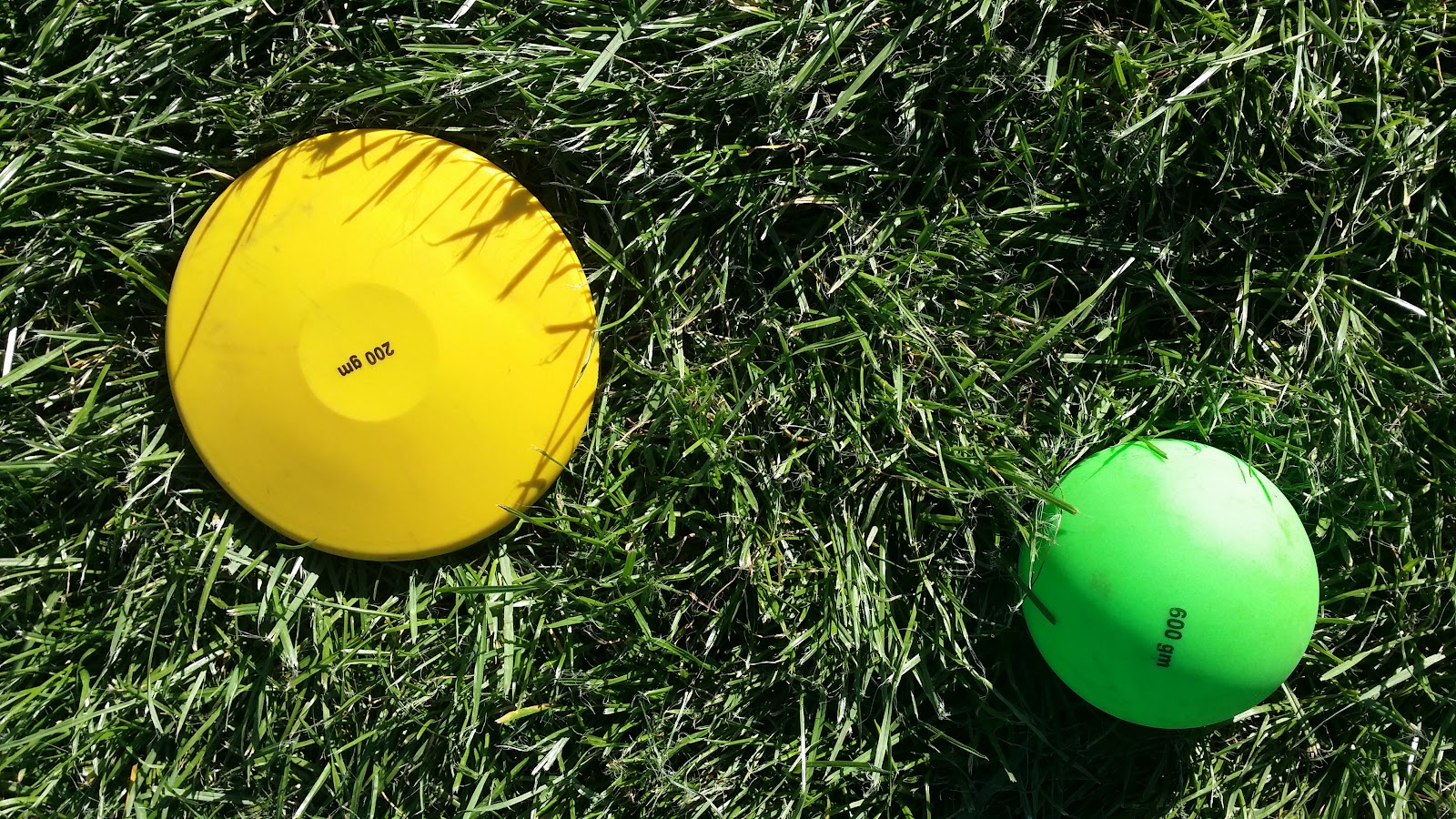
Discus


Roll discus along ground.
Needs to roll forward off front of hand.
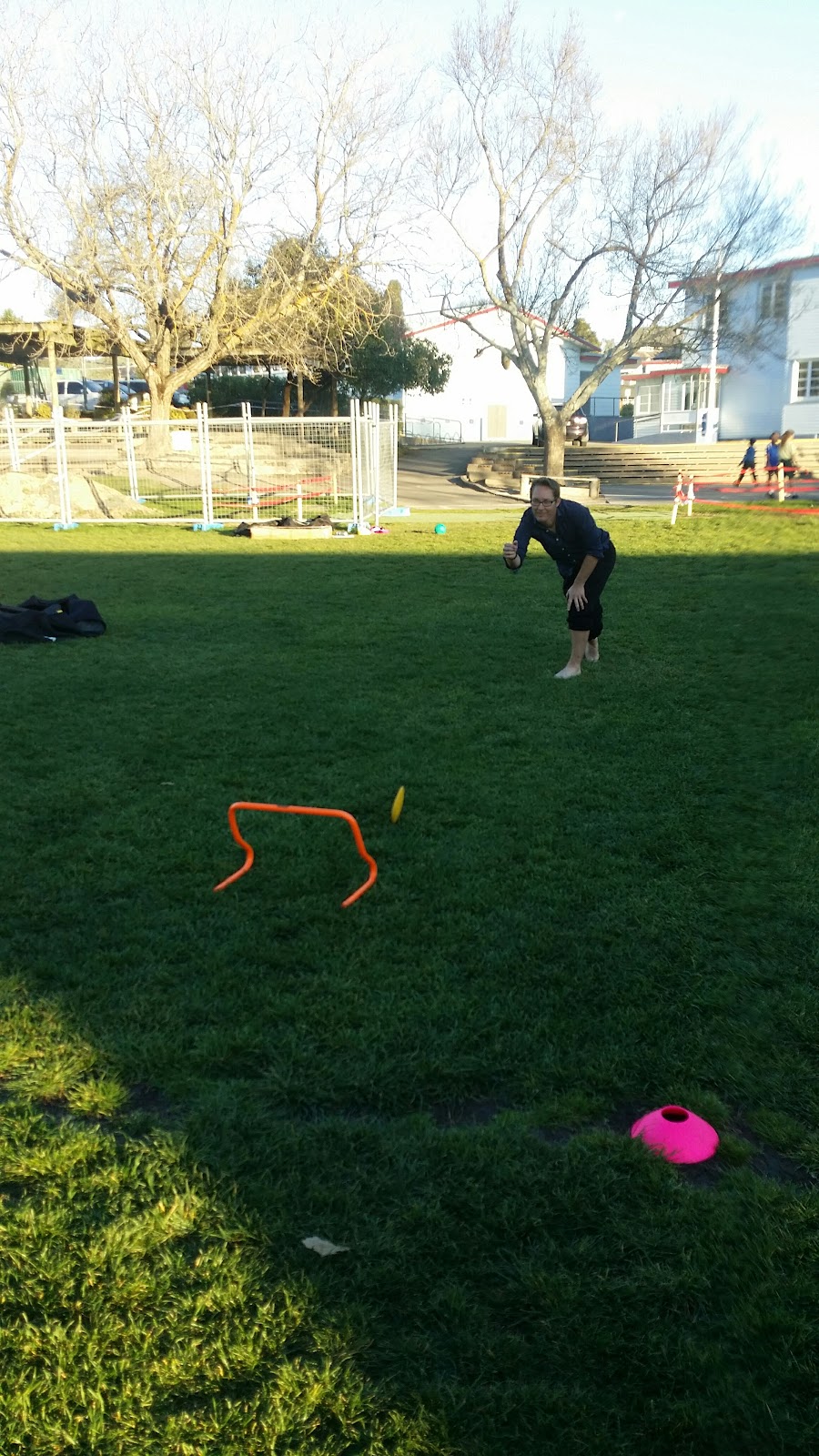
Get the discus through hurdle


Set up obstacles .. under or over or round.. cones they need to knock down.


No beak grip.


Swinging hand bag.. don't use your thumb to grip it.


Chin, knee, toe.. chest up.


Rotation.. spinning.
T.. let it go when t faces front. Hio first knee then shoulder.


Javlin


Palm up, arm up palm up throw and extend. Elbow to front.
Keep arm straight then bring it round and throw.
Foam javlins or vortex are good to use.


Last years PD….
Thursday 13th October 2016


Running:


Get them to try running in different ways. Like a snake zig zagging, like a monkey with arms
hanging low and like an elephant with heavy feet. Then it'll come to what works best.
Fast light feet, arms 90deg and pumping, head looking forward.


Good idea to put cones past the finish line and tell the kids not to stop until then.


Get the kids to start on their tummies, knees or facing the other way listening for the starter.
Works on reaction time.


Long jump:


Run up is the child's age.. as long as there is a long number eg 8+1 is nine steps.
That way they jump off with the same leg they start with.


Skipping ropes all 1m apart.. extension move some around to different widths and then
finally add boulders (hurdles).


Maximise how many kids jumping by using the pit width ways with a limited run up eg 5 steps.


Older kids use skipping ropes too but challenged eg can you jump your height and they
move the ropes to suit.


High jump:


Scissor jump. Toes up (to the sky), bend knee, arms up high, both feet same height.


Skipping rope again. Leg closest to rope goes over first over the line. Try both ways.


Have both junior and normal high jump out for training that way those that are good can
practice and those that aren't can still try.


Can also have kids holding skipping ropes.


If you can't scissors up to your armpits your not ready to frozbee. Use small mats with the
scissor so they get correct technique.


Shot put:


Always start with a bigger ball.
In pairs or threes roll the ball pushing your elbows out. Hands like a diamond then push.


Now try with height.


Then turn body side on and turn and then push ball from one side.
Nose to knee..


Get the children to drop the shot then pick it up. That's how they throw it. In the tips of fingers.


Fingers to neck, chin knee toe, whats the time mr wolf, push it high. (Dirty fingers and dirty neck).


No one throws until told to push it high. No one goes to collect until told and next thrower goes to collect.


Then introduce hoops and get kids to try get the shot in hoops.


The hoops encourage height and technique. Technique rather than distance.
Everyone has the same target, keeps the balls faster and lesson moving.


Discus:
Swing discus in hand by your side.


Show them the end product with the swing then pet them roll the discus.


Set up a course with 2 cones at random and the kids have to go around the course rolling the discus.
See how many rolls it takes.


Make sure it comes out the front not back of hand.


Tee, chin knee toe, when tee faces front let go.


One, two (prac swings), low to high watch it fly.
Goes to the right ots let go to early. To the left too late.


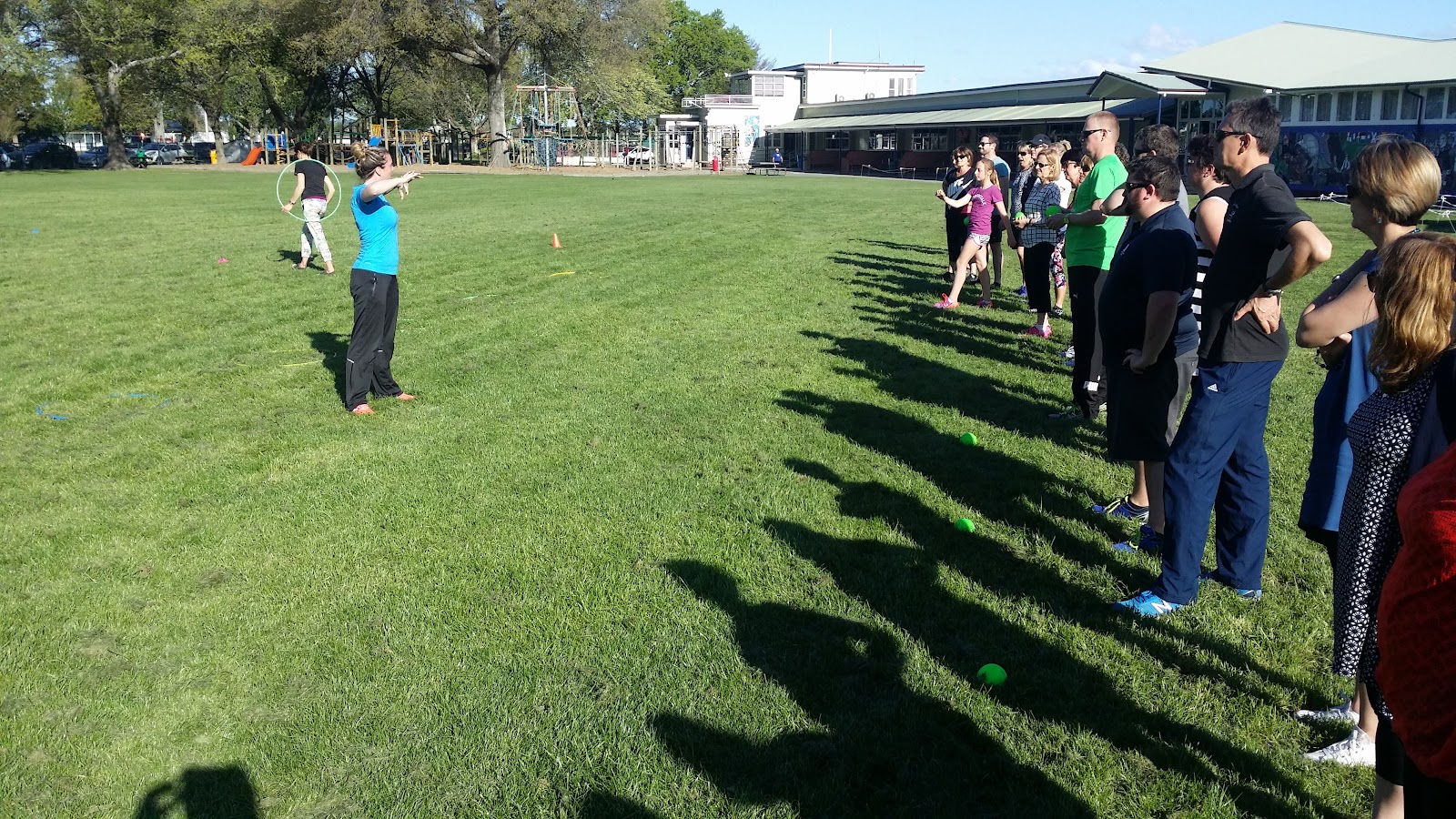
Use a hula hoop and high jump pole and get the kids to get the hoop over the pole.

Can at last option use duck beak but it is wrong technique with letting it out out the back of hand.