Mindlab - Action reflections

Wednesday, 12 September 2018

Digital - Week 8

Design Thinking Mindsets
These 7 Mindsets explore and uncover the philosophy behind IDEO's (2017) Design Kit’s approach to creative problem solving (there are a number of videos on that site to explain each of these):  Use this link to define the different areas.
  • Embrace ambiguity
  • Optimism
  • Iterate, iterate, iterate
  • Learn from Failure
  • Make it
  • Creative Confidence
  • Empathy
Remember to get to know the customer, understand them, how they work, what they do. Listen to them.
Empathy - Humans are at the centre of design. You have to be able to see what happens when you jump into someone else's life.

DEO (2017) suggests that how you think about design directly affects whether you'll arrive at innovative, impactful solutions.
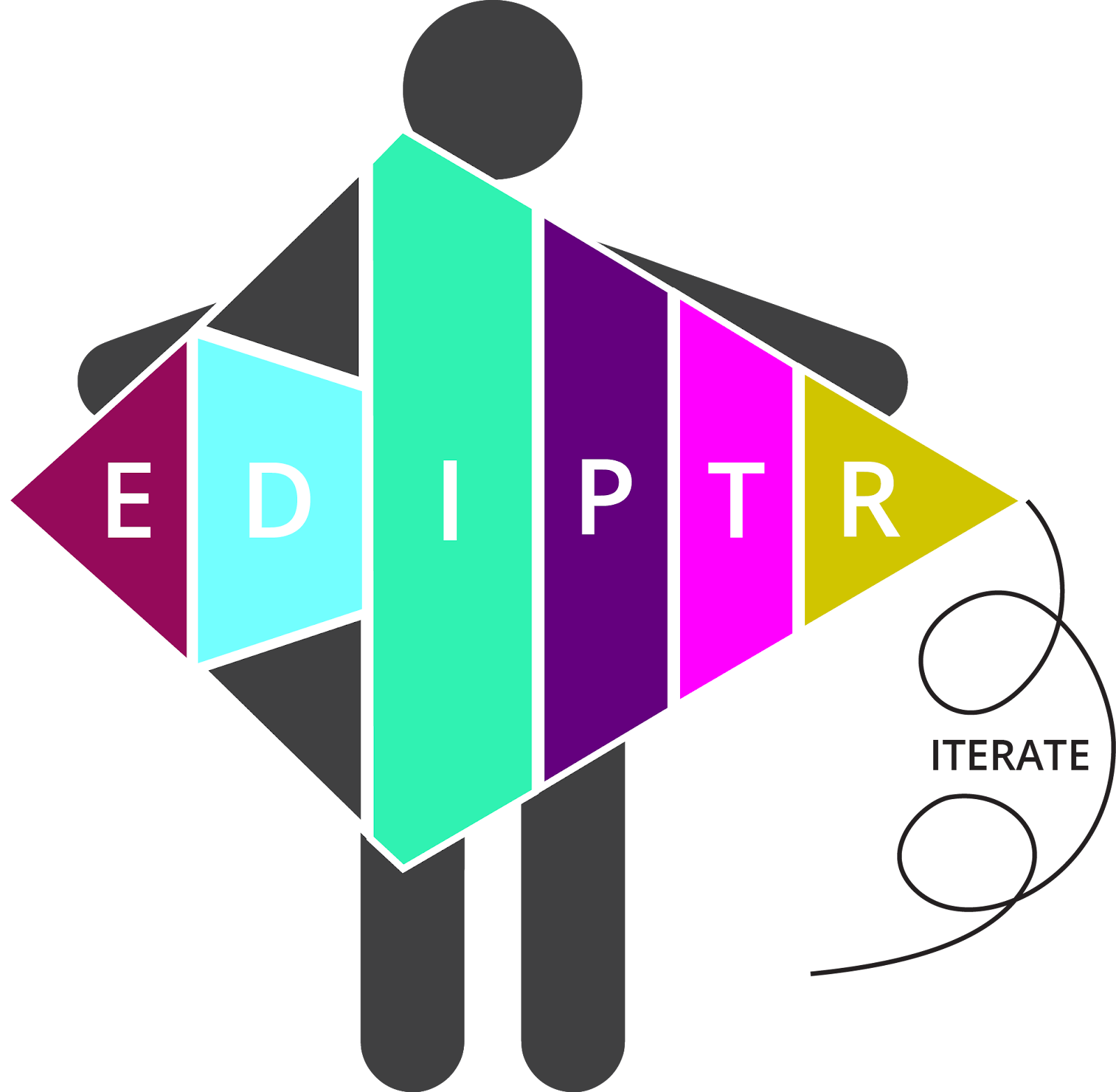
Design Thinking Kite by The Mind Lab by Unitec
In this week's session we'll try out The Mind Lab by Unitec Design Thinking Process + materials, which uses our 'kite' model: Empathise / Define / Ideate / Prototype / Test / Reflect
Change by Design
Tim Brown, the current CEO of IDEO, has written the book about Change by Design (2009). According to him, Design Thinking is Human-centered: ‘The basic problem is that people are so ingenious at adapting to inconvenient situations that they are often not even aware that they are doing so. Our real goal is helping people to articulate the latent needs they may not even know they have’. 
Observation is important too: ´When we observe people going about their daily lives, what is it that they don’t do or don’t say?´ as well as empathy, or as Brown calls it: 'Standing in the shoes of others'. Brown talks a lot about the importance of prototyping, because: ‘Like every other kid, I was thinking with my hands…’. If you want to hear him talking about his book, we recommend you listening to this radio show.
Making ideas tangible always facilitates communication
According to Brown 'Prototypes don’t have to be expensive or time-consuming. In fact, the opposite is better: Put as little time and effort into prototypes as you can and still generate useful feedback and drive an idea forward.'
(Re)capture the Creativity of your Childhood
de Saint-Exupéry (1943) wrote a story about The Little Prince where he tried to showcase that as we age, how we see the world changes. It is the rare person who is able to hold on to the sense of wonderment, of presence, creativity, or of sheer enjoyment of life and its possibilities that is so apparent in our younger selves. As we age, we gain experience and we become better able to exercise self-control. We become more in command of our faculties, our thoughts, our desires. But somehow, we lose sight of the effortless ability to take in the world in full. The very experience that helps us become successful threatens to limit our imagination and our sense of the possible. When did experience ever limit the fantasy of a child? 
One part of the story of Little Prince also relates to customer communication, and to latent needs. At one point, the little prince is asked by a boy to draw a picture of a sheep. After several attempts that fail to meet with approval, the little prince just draws a box with holes in it:
"‘This is only his box. The sheep you asked for is inside.’ I was very surprised to see a light break over the face of my young judge: ‘That is exactly the way I wanted it!’".
Like the little prince, you don't know what your or your customers want and neither do they - until you show it to them.
Four principles to Design Thinking (Plattner, Meinel & Leifer, 2010)
  1. The human rule – all design activity is ultimately social in nature
  2. The ambiguity rule – design thinkers must preserve ambiguity
  3. The re-design rule – all design is re-design
  4. The tangibility rule – making ideas tangible always facilitates communication
Teaching Practices that encourage Design Thinking
Immersion: Have students work together in small collaborative groups to do a deep dive into the subject/topic area. Ask the students to undertake research, observation and develop questionnaires or evaluate data to gain a technical, personal and community views on a topic.
Inquiry-based Feedback: Instead of value-based feedback, inquiry based feedback coupled with observation encourages a more open-ended and in-depth approach to learning. Students are encouraged to minimise expressing their likes and dislikes, and encouraged to first spend time silently observing, and then asking questions prefixed by phrases such as "I noticed that...," "why," and "how."
Before this process begins ensure students brainstorm ways to gather information. For example:
  • Research that includes eBooks, case studies, experiments, data, academic papers etc
  • Observation that includes personal viewing, filming, online videos, documentaries, recorded interviews
  • Questionnaires that includes personal questionnaires, online surveys, research and data including census, government agency information, non-government organisation data, OECD reports etc.
Synthesis: Have students deduce interesting gaps to explore, problems to solve or opportunities to solve, using the information they have gathered from their immersion process.
Ideas on how to gain a new perspective
  • Put visuals on the wall which relate to the topic but at the fringes of the core subject.
  • Ask new questions. Create a how, when, why, what, who question and define the answers.
Note: Ask "thinking" questions – don’t make suggestions. Instead of asking questions to which there is a correct answer, ask students to create the problem. For example instead of saying "Does your girl need ears?" A thinking question would be, "What kind of music does your girl like to listen to? How can she hear the music?"
Students should pose their problem by first tapping into their own wishes and goals that might have real-life results or be largely theoretical and in end in the modeling stages. Such questions such as "How can we grow vegetables without using pesticides?" And, "How can we feed the world's population in a sustainable way?" Both encourage students to think divergently.
Questions, not suggestions, allow personal ownership based on observing, on experiences and on the imagination.
Zoom out: Put the subject/topic in the centre of focus and scale out to the next logical layer. For example if the topic was endangered tigers of India, scale back and look at the life of poachers, the local communities, the black market skin/medicine customers etc. Explore each logical layer of influence as you scale back from the heart of the topic to develop a macro view of the subject.
Ideation, Prototyping and Feedback: Have your students test ideas, solve a problem and extend their understanding without focusing on the ‘right’ answer. This part of the Design Thinking process helps students to 'hold their ideas lightly' in order to review and gain feedback from other student groups and their teacher/s.
The emphasis is on thinking skills and mindsets that allow students to create early and often, adjusting the course of their learning and applying an iterative approach to outcomes that is tweaked from the input of feedback.
Note: Nurture a culture of divergent thinking. Encourage students to be choice makers. Ask students ‘what their work needs’. If a student asks for help, assist by asking the child to give several of their ideas to discuss.
Implementation or Display: As ideas and defined the Design Thinking process moves to the celebration stage where concepts are shared. In this stage have students talk to the group about the changes they applied in their approach, what they reflected on, what evidence they found to support their findings and what new knowledge they gained or shared.
Organisational Focus on Design
Keep in mind that design thinking doesn’t solve all problems. As Kolko (2015) suggests, it helps people and organizations cut through complexity. It’s great for innovation. It works extremely well for imagining the future. An organisational focus on design offers unique opportunities for humanizing technology and for developing emotionally resonant products and services. Adopting this perspective isn’t easy. But doing so helps create a workplace where people want to be, one that responds quickly to changing business dynamics and empowers individual contributors. And because design is empathetic, it implicitly drives a more thoughtful, human approach to business.
Useful resources
  • You are free to use our Mind Lab Design Kite model and printouts in your own practice. We strongly recommend reading out the facilitator guide on 'How to fly The Mind Lab Design Kite' to get started in the process. Fly the Design Thinking Kite high! And ask questions or share results on Twitter with the #MINDLABDT hashtag. To celebrate the te reo Māori, we also have the Wero Whakaaro Auaha -printouts that you are welcome to use in your own practice. 
  • This free Design Thinking for Educators' toolkit, created by IDEO, contains the process and methods of design along with the Designer’s Workbook, adapted specifically for the context of K-12 education. It offers new ways to be intentional and collaborative when designing, and empowers educators to create impactful solutions. IDEO has also published a free Field Guide to Human-Centered Design reveals their process with the key mindsets that underpin how and why they think about design for the social sector, it has 57 clear-to-use design methods for new and experienced practitioners, and from-the-field case studies of human-centered design in action.
  • Stanford University Institute of Design has created many useful resources, such as the Design thinking for teachers The K12 Lab Wiki and Design Thinking Crash Course that helps you to run or participate in a 90 minutes long design cycle by redesigning a Gift-Giving Project. They also provide materials for  Redesigning the school lunch experience and the  Foil-challenge. 
  • You can also download the  FROG Collective Action Toolkit that has a similar set of activities and methods that enables groups of people anywhere to organise, collaborate, and create solutions for problems affecting their community.
  • IBM shares their Enterprise focused Design Thinking Field Guide online. They encourage their staff to use design thinking, since it provides the speed and scale that the modern enterprise demands. It’s a framework for teaming and action. They claim that it helps their teams not only form intent, but deliver outcomes—outcomes that advance the state of the art and improve the lives of the people they serve. 
  • For your personal interest, you might want to view the curriculum for the 6-week Design Kit: The Course for Human-Centered Design -course that will introduce you to the concepts of human-centered design and how this approach can be used to create innovative, effective, and sustainable solutions for social change.
Via Unitec library you have access to many interesting books and articles relating to Design Thinking. You could for example take a look at the 'Designing for growth a design thinking toolkit for managers'. In that book Jeanne Liedtka and Tim Ogilvie cover the mindset, techniques, and vocabulary of design thinking; unpack the mysterious connection between design and growth; and teach managers, in a straightforward way, how to exploit design's exciting potential. They have also written a 'The designing for growth field book: a step-by-step project guide', in which they provide a step-by-step framework for applying the D4G toolkit and process to a particular project, systematically explaining how to address the four key questions of their design thinking approach.

Tuesday, 4 September 2018

week 7 Digital

Reverse Time Capsule 
“What if we were to receive a time capsule not from the past, but from the future?” (Coupland, 1995)
What would you put into a reverse time capsule to send back 20 years? What current artifacts might surprise the citizens of 1998 the most? Share on your location’s Padlet: 
The concept of disruptive technology was first outlined by Clayton Christensen (1997), in his book 'The Innovator's Dilemma'. In it, he states that “Disruptive technologies bring to a market a very different value proposition than had been available previously. Generally, disruptive technologies underperform established products in the mainstream markets. But they have other features that a few fringe (and generally new) customers value.”
Disrupted Domains
Many aspects of society have been recently disrupted by technology. As a few examples consider that one of the world's largest...
...taxi companies owns no taxis (Uber)
...accommodation providers owns no real estate (AirBnB)
...phone companies owns no telecom infrastructure (Skype)
...retailers has no inventory (Alibaba)
...movie houses owns no cinemas or physical stores (Netflix)
...media companies owns no content (Facebook)
...software vendors doesn’t write the apps (Apple / Google)
How Many Jobs Are At Risk?
According to the Chartered Accountants Australia and New Zealand (2015), the number of New Zealand jobs at risk of automation in the next two decades is 885,000 (46%)
Education Disruption
In terms of education, an interesting blog post by Gade (2014) states "The more overdue a disruption is, the more sudden it is when it finally occurs, and the more off-guard the incumbents are caught". This reflects the idea of 'Amara's law', which says that we tend to first overestimate, then underestimate, the impact of new technologies (Ridley, 2017). Gade (2014) suggests that technology disruption could mean “eliminating the bottom 99% of workers in [the teaching] professions”, while also suggesting that the rise of the 'celebrity teacher' is entirely possible.
Twitter 
These are the hastags we will use on Twitter, to discuss the benefits of using twitter as an educator #TMLwhytwitter and #TMLDCL. You can also set up your own TweetDeck at Tweetdeck.twitter.com to follow #TMLDCL and the other hashtags used at various points throughout the session (on your laptop)
Twitter Terminology Basics
Tweet / Reply / Retweet (RT) / Direct Message (DM) / Hashtag (#) (precedes a topic) / @ (precedes a Twitter user name you are referring to) / Following/Followers / Modified Tweet (MT) (summarising for sharing) / Hat Tip (HT) (citing your sources in Twitter!)
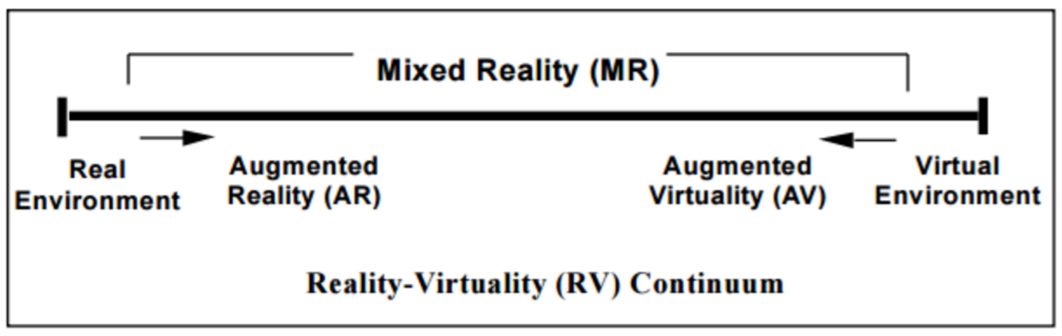
The Reality Continuum
From Milgram, Takemura, Utsumi & Kishino (1994). Between the two extremes of the real environment and a completely virtual one, the continuum goes from overlaying reality with a few additional elements on the left, to the occasional introduction of real elements into a digital environment (e.g. the user’s hand) on the right
Virtual Reality
  • Creates immersive, computer generated environments which replaces the real world
  • The user is completely immersed in an artificial world and cut off from the real world
  • Senses are mediated by the virtual world
Popular VR headsets include Oculus Rift and Google Cardboard. The HTC Vive is another popular headset that works with Google Tilt Brush, a VR application that supports the creation of 3D virtual art.
VR at Pakuranga College - The VR game created and marketed by students at Pakuranga College is available here.  
Google Expeditions
Google Expeditions, which you can use with Cardboard, is a virtual reality teaching tool that lets you lead or join immersive virtual trips all over the world — get up close with historical landmarks, dive underwater with sharks, even visit outer space! It was released free to the public on 27 June 2016 but is not totally free, especially for the whole class and with full features. See the Google Expeditions Tutorial
  • Expeditions will only work on a WiFi network that is set up to support peer to peer networking
  • If you cannot connect on your local WiFi network, you will need one member of the group to use their phone (and their data) to act as a hotspot - other members of the group will need to connect to that hotspot
  • If technical difficulties prevent you from joining a tour, it is possible to just look at a tour on your own device without joining a group
  • You can use the app with your smartphone in Google Cardboard mode or full screen mode outside the cardboard, or just with your tablet
You can now make your own tours using Google Tour Creator
Augmented Reality
Augmented reality overlays information on a view of the real world, rather like the Terminator's view of the world in the 1984 movie, but it is no longer science fiction. Unlike virtual reality headsets, which block out the real world, augmented reality headsets like the Microsoft HoloLens and Daqri Smart Helmet mix reality and virtual content together.
Augmented reality apps use various types of triggers to link views of the real world to virtual content. These triggers might be 2D images, as in simple tools downloaded through apps onto smart phones like 
- Google Translate (needs printed text - not handwriting). Try Googling images of written road signs in your chosen language 
- Quiver, uses printed sheets that you can colour in
Or, they can be GPS locations, as in Zombie Run and Pokemon Go!
HP Reveal terminology
Trigger Image: The image recognized by the app, which launches the overlay. Images with high contrast and unique features are best. The app uses a ‘traffic light’ to tell you if an image will be a good trigger.
Overlay: An image or video linked to a trigger image
Aura: A combination of trigger image and overlay
Click on this link to try some universal auras tinyurl.com/KKARTML
Individual task with HP Reveal
Create an ‘aura’ with your mobile device. There are some instructions on the portal (these still refer to Aurasma) if you find it hard to work out how to get going (Android and iOS versions are rather different)
  1. Create a video - 3 seconds talking about yourself
  2. Create a trigger image by drawing a detailed picture of your face
  3. Use the image to trigger the video
Where could you use AR in Schools?
There are many approaches that can be used to bring learning to life through augmented reality (Nesloney, 2013):
  • A Student Photo Wall: Set up a display of student photos in the classroom linked to a personal student videos about the individual student that can be shared with parents and visitors.
  • Book Reviews: Have students record a video of themselves giving an review of a book. The trigger image to launch the video review could be the book cover, a picture of the student or an image they have drawn. Afterward, other students/teachers can scan the cover of the book and instantly access the review.
  • Parent or Inspiring Role message: Source a recording from an inspirational speaker or record a message from a parent/friend of the student that provides words of encouragement to the student. Attach a trigger image to student desks or cover of their books.
  • Year books/School magazines: Add an AR to printed school publications and include video profiles from sports events, school plays or award ceremonies as a rich memory of school activities.
  • Word Definition Walls: Students can record themselves providing the definitions to different vocabulary words on a word wall.
  • Lab Safety/Safety Messages: Put trigger images linked to safety videos around a science laboratory/workshop so that when students scan them, they can learn the different safety procedures and protocols within the learning environment.


Whakataukī
Ko te pae tawhiti whāia kia tata, Ko te pae tata. Whakamaua kia tina.
Seek out distant horizons and cherish those you attain.
Related Standards for the Teaching Profession
Teaching
Teaching: Teach and respond to learners in a knowledgeable and adaptive way to progress their learning at an appropriate depth and pace. 
Te whakaakoranga
Me whakaako me urupare ki ngā ākonga i runga o te matatau me te urutau kia neke whakamua ai te ako i te taumata me te kaha e tika ana mō ia ākonga. 

Digital Week 6

3D Modelling
In small groups, choose and watch together at least one video from this week’s media, relating to 3D design or 3D printing (i.e. '3D printing a lunar base', '4D printing', 'What If 3D Printing Was 100x Faster?', '3D printing UAVs' or 'Kidesign - 3D Design and 3D Printing for Education').
In your groups, suggest ways in which the widespread use of these technologies in industry might require changes to current educational practice in your own context. Publish your group thoughts to the G+ Community, In Class Tasks, using #3DEducation and your location as hashtags.
3D Thinking and Spatial Intelligence
This type of 3D modelling is not only useful for learning to design 3D objects. Many researchers believe that it links to wider skills that can be developed and applied elsewhere. For example Dünser, Steinbügl, Kaufmann and Glück (2006), part of a team that have published widely on the value of students creating and using 3D models, state that “Spatial ability is one of the main components of human intelligence [and is especially important for several occupations or educational programs and training… spatial ability is pervasive, which means that we need it for almost each activity in everyday life" 
Similarly Karon (2015), in the context of teaching 3D technology to children, notes that “Research indicates that strong spatial thinking, a skill necessary for creating three dimensional objects, is directly linked to success in science, technology, engineering and mathematics...spatial thinking can be taught and improved through practice.” 
Topology Sculpting
A type of 3D modelling that is like sculpting clay. SculptGL lets you do this in the browser
Free 3D Modelling Software
There are quite a few options when it comes to free 3D modelling software that is available online. Here is a list of a few we recommend:
Tinkercad
Tinkercad is a free, easy-to-learn online app anyone can use to create and print 3D models. You need to Sign Up / Sign In. For this we recommend you use a laptop with a mouse.
If you haven't used Tinkercad before, you should find  these videos useful for reference:
Alternatively, if you prefer to read rather than watch, you can use these step by step text-based guides made by Coco at The Mind Lab
Remember to save your 3D model frequently

Leadership week 6

Leadership Assessment 1
In part 1 of your LEADERSHIP 1 assessment you'll need to write (either individually, or in groups of two or three) a cohesive essay where you critically analyse the leadership of a change initiative that you were involved with in the past. Identify the leadership theories, styles and attributes used and evaluate their effectiveness. You can choose the leadership theories freely, they just have to be ones that are recognised in research literature.
You then plan your leadership of a future digital and collaborative change initiative. Indicate how insights gained from reflecting on the past initiative have influenced your plan for leading the future initiative. Remember that the focus of the plan is your leadership - not the initiative itself.
Leadership Theories
As time has progressed a number of leadership theories have emerged which deal with various styles and methodologies about leadership. These theories could be labelled in four broad headings; namely the Trait theories, Behavioral theories, Contingency theories and the Power and Influence theories. In 1922, Max Weber (see Weber, 1978) identified three kinds of leader/follower relations; traditional, bureaucratic and charismatic. He also noted that they occur in combination, and there may be gradual transitions between these types. Since then, much has been written about types of leadership. Some examples of leadership theories relevant to education include
  • Transactional
  • Transformational
  • Pedagogical
  • Distributed
  • Servant (Agile)
  • Tū Rangatira
  • Situational
Burns (1978) outlined the original ideas for both transactional and transformational leadership. He stated that both are 'moral' forms of leadership, as opposed to 'amoral' power-wielding.
Bass & Riggio (2006) developed their transformational leadership theory based on Burns' original ideas. This has been the one many of our students have found interesting to reflect upon in their Leadership 1 assessments. According to this theory, transformational leadership can be defined based on the impact that it has on followers. 
Providing a different perspective, Tū Rangatira: Māori Medium Educational Leadership (Ministry of Education, 2010) presents a model of leadership that reflects some of the key leadership roles and practices that contribute to high-quality educational outcomes for Māori learners. It focuses on leadership practices, providing insights into how effective professional development programmes can work towards strengthening leaders’ capabilities, growing capacity and sustaining exemplary leadership in the Māori medium education sector. Its message is not, however, limited only to kura. "Contemporary times call for innovative thinking. This visionary role of leadership entails understanding the past, recognising the present and envisioning the future, to bring about optimal education and life outcomes for learners.” (p.24).
Leadership Styles
Situational leadership (Hersey, Blanchard & Johnson, 1969) is interesting from the perspective of linking theory and style. It suggests that leaders adjust their leadership styles based on the 'readiness' of their followers. Situational leadership theory argues that for leaders to be truly successful, they must adjust the way they lead their teams, to suit two factors:
  • The ‘task maturity’ of the people they are leading (that is, how competent a person or team is at the task at hand)
  • The details of the task 
The Situational leadership model suggests four quadrants. Each quadrant denotes a different leadership style. In situational leadership theory, leaders place more or less emphasis on the task, and more or less emphasis on the empowerment of the people they’re leading, depending on what’s needed to get the job done successfully
(Adapted from Hersey, Blanchard and Johnson, 1969)
In class, complete the University of Kent (2011) online quiz about your typical leadership styles When you have finished record your results and thoughts for later use (Leadership 1 & 2 Assessments).
University of Kent - This online quiz from the University of Kent (UK) will ask you 50 questions about your own styles of leadership tinyurl.com/TMLLeadership(requires Flash)
Golman’s Leadership Styles – A different view of leadership styles - one of the reasons for including these is that they are in the same sources as the emotional intelligences that we look at later. Also important to note that each list of leadership styles tends to differ somewhat, so we are looking at three examples, Hersey and Blanchard, Goleman and the University of Kent
  • Coercive
  • Authoritative
  • Affiliative
  • Democratic
  • Pacesetting
  • Coaching
Leadership Attributes
There are many personal characteristics that may be identified as aspects of leadership. However it may be helpful to explore some of the attributes identified within various categories that we have introduced on the course previously. These include:
  • Key Competencies (e.g. relating to others)
  • 21st Century Skills (e.g. real-world problem-solving and innovation)
  • Growth Mindset (e.g. resilience)
  • Emotional intelligence (e.g. social skill)
Google Training and Emotional Intelligence
Google (n.d.) freely share their New Manager Training Guide, which includes some coverage of the importance of emotional intelligence.
5 Emotional Intelligences
In this session we look at the five emotional intelligences. 
  1. Self-awareness
  2. Self-regulation
  3. Motivation
  4. Empathy
  5. Social skills
See tinyurl.com/TMLEI (Akers & Porter, 2016) for more detail on these intelligences.

Critical Reflection on Leadership 
In-class you will also use a critical reflection framework to consider leadership iof previous change initiatives in preparation for the Leadership Assessment 1.See media below. 

Active Learning

What is active learning? Teaching techniques. small task, can have several tasks within. applying, creating. Discussions.

Face to face - discussions
online - discussions

students learn more through active learning.
More focus on higher learning skills

Week 7 Leadership


Some tools that could be used to facilitate online discussions
Why Use Twitter
  • Encourages brevity
  • Identifies the tweeter
  • Allows replies and hashtags
  • Integrates with other tools (e.g. Tweetdeck, Tagboard, Pocket, Buffer, Feedly)
  • Supports weblinks
  • Mobile App available
  • Can be linked to from blogs etc.
Mind Lab Twitter
Handle: @NZMindLab
Hashtag: #TMLDCL
Some Twitter Tweeters and NZ education hashtags
@EducationGovtNZ @netsafeNZ
#edchatNZ (See: www.edchatnz.com/getting-started) #kidsedchatNZ #engchatNZ #mathschatNZ #scichatNZ #hackyrclass
Twitter Tips for Teachers
Education Review (2013) suggests ten ways that New Zealand teachers can get more out of the Twitterverse. We think these 6 are the most useful.
  • Use TweetDeck to manage your Twitter feeds.
  • Choose hashtags carefully and check for duplicates already being used
  • Join the #edchatNZ club. Teachers and anyone interested can jump onto Twitter and join the discussions at #edchatNZ
  • Make use of lists to group people based on any criteria you want for the purposes of reading their tweets
  • Saving tweets for a rainy day. There are several tools for saving your favourite tweets, such as Diigo.com, Getpocket.com  and Evernote (using @myEN)
  • Teaching with Twitter, for example microblogging for ‘summing up’, following the tweets of a famous person(s) during a significant event, such as politicians in the build-up to an election, ‘time tweeting’, where students choose a famous historical figure and create a twitter account from them, writing regular tweets in the appropriate vocabulary, or progressive collaborative writing, where students agree to take it in turns to contribute to an account or ‘story’ over a period of time.
Leading Online Discussions (MindEdge Learning Workshop, 2014).
  • Set guidelines
  • Make connections
  • Challenge students to think critically
  • Encourage participation
  • Praise discussion posts
  • Guide conversations back to the question at hand
  • Use real world experiences
  • Hesitate before interjecting
We will ask you to try to apply these suggestions during our Twitter discussion sessions.
Wicked Problems
A wicked problem is a problem that is difficult or impossible to solve because of incomplete, contradictory, and changing requirements that are often difficult to recognize. They are highly complex, uncertain and often value laden. The use of term "wicked" here has come to denote resistance to resolution, rather than evil. (Rittel & Webber, 1973). Bolstad et al. (2012) argue that learners and teachers, families and communities need support to develop the skills needed to engage in solving the wicked problems of the 21st Century.
Is teaching a wicked problem?
The original TPACK paper argued that teaching was a wicked problem, referring to the following factors (Mishra & Koehler, 2008, p. 2).
  1. Requirements that are incomplete, contradictory and changing
  2. Uniqueness, in that no two wicked problems are alike
  3. Occurring in complex and unique social contexts
  4. Solutions that are difficult to realize and recognize because of complex interdependencies and contexts
  5. Solutions that are not right or wrong, simply “better,” “worse,” “good enough,” or “not good enough”.
  6. Solutions that have no stopping rule, the best we can hope for is “satisficing".
The 2017 Horizon Report (Freeman et al, 2017) explores the significant challenges impeding technology adoption in K-12 education and identifies 'The Achievement Gap' and 'Sustaining Innovation through Leadership Changes' as Wicked problems.
Mess Mapping
Mess Mapping is a process for collecting, sharing, organizing and evaluating information regarding a Wicked Problems. A Mess Map diagram or mural represents a model of the problem at hand that shows the important “chunks” of information and their relationships with other “chunks.” (Horn & Weber, 2007)
Education is complex. Wicked problems don't have a single answer, but through the use of online tools and digital media, independent people are able to work together to find ideas and concepts to explore wicked problems. Distributed leadership allows many people to work together to tackle these wicked problems. Refining traditional roles for students and teachers allows distributed leadership to occur.
Online and Distributed Leadership
Effective leadership in digital and collaborative environments requires more than a repertoire of techniques or lessons, particularly in blended learning models, where part of the learning process is online. The integration of digital tools and collaborative teaching methodologies requires an understanding of how to lead interactions online. The educator plays a key role in leading the learning environment and even when conducting activities that are largely student led and student regulated, such as online discussions, requires active direction by the teacher. 
Distributed leadership requires all educators to take responsibility for leadership, whether or not they are in a formal leadership role. It involves not only staff taking on leadership within the school but students too. It is closely linked to collaboration, in that distributed leadership builds on interdependence.
Whakataukī
Ko te pae tawhiti, whāia kia tata. Ko te pae tata, whakamaua kia tina.
Seek out distant horizons and cherish those you attain.
Standards for the Teaching Profession
Learning Focused CultureFoster trust, respect and cooperation with and among learners so that they experience an environment in which it is safe to take risks. 

He ahurea akoranga
Me whakatītina i te pono, i te whakaaro nui me te mahi tahi i te taha, i waenga o ngā ākonga kia rongo ai rātau i tētahi taiao ka taea te mahi tūpono i roto o te haumarutanga.

Diversity of Leadership Practice
Since Surowiecki (2004) argued that “diversity helps because it actually adds perspectives that would otherwise be absent”, Harris (2013) suggested that “the potential for imaginative and creative solutions to problems is more likely to occur where there is diversity of leadership practice that fits the contours or the needs of the organization or system.” 
Distributed Leadership
Distributed leadership acknowledges that the work of leading and managing schools involves multiple individuals – not just those with formally designated leadership and management positions but also individuals without such roles. It is primarily concerned with the practice of leadership rather than specific leadership roles or responsibilities. It equates with shared, collective and extended leadership practice that builds the capacity for change and improvement.
Distributed leadership means mobilising leadership in order to generate more opportunities for change and to build the capacity for improvement. It is ‘leadership by expertise’ rather than leadership by role or years of experience. Genuine distributed leadership requires high levels of trust, transparency and mutual respect.
Distributed leadership is about collective influence and is a contributor to school success and improved performance. It is not an accidental by-product of high performing organisations. Individuals are accountable and responsible for their leadership actions; collaborative teamwork is the modus operandi and inter-dependent working is a cultural norm. (Hargreaves, Boyle & Harris, 2014).
  • Expertise not position
  • Distributed accountability
  • Distribution is non permanent
  • Changing roles and responsibilities
  • Leadership as practice
A strong correlation has been found between the building of leadership capacity for learning and teaching through distributed leadership and increased engagement in both learning and teaching. Because digital technology is multifaceted, it opens itself up to involvement from a variety of people and groups with different roles and responsibilities causing distributed leadership across time. Collaboration in a digital technology setting is the purposeful joining of people in an online environment that enables relevant problems to be tested and validated through constructed knowledge.
Jones (n.d.) defines distributed leadership as action by many people working collectively across the institution to build leadership capacity in learning and teaching. It differs from other, more traditional, approaches to building leadership capacity in which the traits, skills and behaviours of individual leaders are emphasised.