TKI - breakout 2
Exploring the TKI channel
Create your own homepage
You can have different curriculum areas. - little kete of knowledge. Links and other useful things.
You can change the order by dragging and dropping.
Go into create kete -
Name it
Create links a lot like using a wiki or blog
You cannot share individual kete but you can make them as a preset home page and share that. This would be good for sharing planning etc.
Create kete
Name them
Add info and links
Then put into a preset home page.
You can share by choosing the preset homepage
Manage
Edit, copy, apply to home page, share, unshared, delete
Shared homepage ID 18boq Anzac Day resources
Students can use the link that you create.
If you get lost you can use the FAQs on the page
You can save your search
Search a topic
Up the top on the right hand side click save search.
You can bookmark
There is a bookmark word under setting that you can click to save the page.
The kete need the same skills to create a wiki or a blog.
Interesting links
Youth guarantee - worth looking at
Assessment online.
Wicked
Digistore
Reomations animations in Maori
Ncea pages on tki
Studyit good for Dion for exams. Study planner, encouragement
Revision books
Wednesday, 10 October 2012

Google Docs
Using google docs and google and handouts to connect with the world! Wendy gorton
bit.ly/gafesummitglobal
Education consultant ex teacher.
Google + and google docs
bit.ly/globaldocs
To collaborate with other classes around the world.
Google + handouts
Collaborative projects..
Ciese
Journey north mystery class
Project 20/20
Global education conference 2012
Earth watch education
Polar connect
bit.ly/gafesummitglobal
Education consultant ex teacher.
Google + and google docs
bit.ly/globaldocs
To collaborate with other classes around the world.
Google + handouts
Collaborative projects..
Ciese
Journey north mystery class
Project 20/20
Global education conference 2012
Earth watch education
Polar connect
Dr Jason Ohler
Dr Jason Ohler
Keynote speaker 1
New media, new kids, new literacies,new citizens - transforming learning through digital creativity
Digital citizens digital communities
Augmented, immersive reality
Augmented reality artwork
Literacy... consuming and producing the media forms of the day
Digital lit
Value writing more
Art.
Hans Roslings -200 countries, 200 years. The joy of stats.
Attitude is the aptitude
The degree in which you are willing to learn new things determines how successful you will be.
Character ed
Students will study the person and social ...of social media.?
Digital footprint
When do we talk about the things that are changing us.
Digital story -new media narrative
Cares
Compensation
Assistant
Recognition
Extra time
Support risk, pilot
Turn concerns into goals
Concerns are just negatively worded goals.
Digital makeup
Keynote speaker 1
New media, new kids, new literacies,new citizens - transforming learning through digital creativity
Digital citizens digital communities
Augmented, immersive reality
Augmented reality artwork
Literacy... consuming and producing the media forms of the day
Digital lit
Value writing more
Art.
Hans Roslings -200 countries, 200 years. The joy of stats.
Attitude is the aptitude
The degree in which you are willing to learn new things determines how successful you will be.
Character ed
Students will study the person and social ...of social media.?
Digital footprint
When do we talk about the things that are changing us.
Digital story -new media narrative
Cares
Compensation
Assistant
Recognition
Extra time
Support risk, pilot
Turn concerns into goals
Concerns are just negatively worded goals.
Digital makeup
Tuesday, 22 May 2012
Anjela Webster Cyber Safety Evening
How the internet is changing the way we think read and remember. Nicholas Carr
Katie.com Kath
7 parents attended
Day of glass
Connectivity
Trends show we want
Expereinces
control
choice
connection
participation
Virtual Society and Young Minds..
Digital divide between what children are doing online and what parents think they are doing
Areas of concern
accessing inappropriate content
Predators
Online bullying - harassment
Sharing personal info online
social networking and uploading content
use of digital media 24/7 (phones, ipods tec
Online gaming and wideo gaming 'underage'
illegal downloading and file sharing.
real life vs online life
Most common Net safe problem is cyber bullying
Differences
NetBasics
the whatsit
hectors world
in my day
Cyber support
Special mention for girls...
Girls 10-16 years
Identify development - being understood
social referencing ... Media
Provide real and positive make role models in the life of your daughter
keep the lines open
talk talk talk
youtube clips to help demonstrate to your own kids.
life online --- integrity.. safety.. opportunity.. balance
Reputation Management
Integrity
Privacy and Identity
Management - time relationships..
How inportant is 'privacy'
Will it be important in the future

Reputation Management
Integrity
Privacy and Identity
Management - time relationships..
How inportant is 'privacy'
Will it be important in the future

Scuttle pad is an alternative
Monday, 21 May 2012
Staff meeting
Discussing going 1:1 computer programmes. A lot of the staff think that we are not ready for 1:1 problems being that some staff are not skilled enough. Some staff think some classrooms at the moment don't have much equipment. Also a support person would be required to help those people that are chosen to be a 1:1 classes like Parkvale. One thing to look at is that we should not look at the teaching that was happening at Parkvale. We need to watch what they do and see if we can do it better. One thing that was interesting was most teachers talked as though they would be taking the class. Bring your own device was a suggestion from Paul. Once our wireless system is up and running.
Tuesday, 3 April 2012
Gail Loan Writing PD
First in groups we will look at each others writing plans.
What is the effectiveness.
Writers Eye - Fiona
Introduced as an activity to start the authors notebook. created their own eye. Idea from Mechanically Inclined page 35.
Next activity is to write an opener sentence that has a comma after a long introduction. Eg If we have to go rafting on the Mohaka river, today isnt such a bad day for it.
The language features that the chn use - they should be able to identify and explain why they used it. Fiona is trying to make the chn aware of the language features they are using.
Jenny Cameron
The use of a journal story. read the digging for pipis. Pt 4. no? 2005
Key questions used:
what do you notice about the journal story
used a plan. picked a moment in time. Used the senses and created a plan. Used it to pick a moment in time.
Rosemary
The Warrior Mountains. Katerina Mataira
Raewyn
Mrs Wildings Potatoes. Page 8-12 Journal Part2 No.2 2011
IALT: Use Complex sentences in my writing
Use a range of interesting sentence starters.
Success Crietria
a hook
a sentence beginning with a conjunction (AAAWWUBIS)
etc
Summarising
Everyone used models.
brainstorming. activating nouns which will make strong sentences. Used the building site at school as motivation.
Next step :
to use my authors notebook.
to continue using models. Success Criteria that is made together with the chn.
Gail Says: To plan for writing for a whole
Target children should be seen every day. Identify what your target children need. Give them what they need - this may mean that they do not do what the rest of the chn do. Even if you need to take them back to lower levels. So they leave HNP being able to write. We need to ensure these children get what they need. Many of your groupings will be fluid. Writing is not done like a reading rotation.
The Tail of the Gecko By Marlene Bennetts - Article
What do we expect from articles?
facts
topic specific vocab
pictures
similies
What do we think will not be there?
paragraphs
AAAWWUBIS
Topic sentences at the start of paragraphs
supportive sentences.
- dash - what effect does it have? it tells us more.
What effect does the excamation mark have. - adds humor.
lANGUAGE Features
repeatative
Pattern
descriptive language -
infer - the enemy thinks the tail is a lizard.
Passive voice - they are sealed rather than the muscles sealed the arteries which is active voice.
Monday, 5 March 2012
Ongoing assessment/monitoring with Rita Palmer
 Rita Palmer has written a book
How do we assess reading now we are no longer using standardised testing.
Linking the reading and writing.
Finding information in the text to show what the characters in texts are feeling. How do you know?
We as teachers have a feeling that when I first started teaching I Probed at the beginning of the year and at the end of the year and we felt we had a good idea where they were at and the moment that is made during the year. So we as teachers now need to look at a different way of monitoring our children.
We need to look at why we use running records and what we get out of it. We as teachers need to sharpen our skills so we can identify
Our monitoring system needs to be ongoing and accurate. Testing is one way of seeing where chn are.
Testing
Plus
Standardised
Confirms hunches
recorded and can be tracked
Informs next steps
Reflection on teaching/learning success
Any stage, any number of kids - ease of admin
parents like it.
Free from personal bias
Minus
Doesn't match interest - prior knowledge
not fair accurate score
Time pressure
snapshot = label
not all kids need it
If we are using a test as a tracking device. It needs to be done at the start and the end of the year.
What the Ministry is trying to do is to stop some teachers just testing in January then not testing again until Dec.
Where do we as a school stand?
How do we as teachers cater for those children who are struggling?
Testing for confirmation is OK :)
Testing needs to be able to tell you what the child in question needs to learn.
The feeling in the group is there is a lack of confidence from the teachers to ask the right questions.
The questions that we need to ask to see what the child's comprehension is like.
What do comprehension questions look like. - can a child find information in a text. start with prior knowledge. Could use the question matrix. reciprocal reading... Focus on asking questions.
How we run our guided reading sessions is so important
Focus on one skill at a time.
Inferring
Find in the text what the author is saying.
read text
What is right there
What is not right there.. questioning doesn't do it for this.
use the "put your finger on where the author has used..." Those children that did not answer or looked blank obviously don't know.
Everyone needs to be able to have a tracking system that works for you.
Start with guided reading at the start of the year - lead into reciprocal reading- shared reading -
When you find there are a lot of gaps across the groups use shared.
If there is technical language identify in your prior knowledge only if there are no hints in the text.
Marmite (read it)
I like marmite. (read it, what does it mean?)
I like marmite on toast. (now what does it mean?)
Otherwise note technical words that have no hints. Otherwise let the children try and work it out.
There is a word here that means - sorry, happy, sad, - you can use clear maths counters. Discuss with there buddies.... Children must understand that reading is about making meaning!
Good readers take risks. Clarify anything that you are unsure about. Helps with context and meaning. If they don't write it down make sure you as a teacher clarify words.
Your information should be all in one place.


The Zoo
by Anthony Browne
a) When we finally got there Dad had to have a row with the man in the ticket booth. He tried to say Harry was only four, and should get in half price. (He's five and a half actually). "Daylight robbery!" Dad snarled.
What kind of person do we think dad is?
Highlight the words that show you what kind of person dad is...
** The use of italics had..
** what does snarl mean .. how would the message change if it was said.
** Drawing conclusions
** Inferring
b) "What animal can you eat at the zoo?" asked Dad.
"Don't know" I groaned.
"A hot dog!" howled Dad. He was holding his stomach and laughing so much that tears were rolling down his face.
What kind of relationship do you think the dad and son have?
What has the author used to show this relationship?
infer about personality using their prior knowledge - reader as a writer.... use the same text for reading as writing.
what I thought
Techniques - italicising - using specific language to add detail.
c) "Poor thing" said Mum.
"You wouldn't say that if it was chasing you " snorted dad.
Porridge
by Michelle Boston
Rating is a good way to identify whether children understand/ have made a connection with the author.
What has the author done? italics, repeats - Hates it.
could look at a range of sentence structure and length.
How do we link reading/writing - using italics
What did you want the reader to get or feel?
Twilight comes Twice
by Ralph Fletcher
personification/ adjectives/metaphor.
imaging
what image does the writer want the reader to get in the first line.
Described the darkness as something else.
Twilight comes Twice
Slowly the dusk pours
the syrup of the darkness
into the forest.
Crows gather in the treetops
for a last minute gossip.
Dawn picks
bits of dark
from between the blades of grass.
With invisible arms
Dawn erases the stars
from the blackboard of night.
visualisation.
Sometimes we don't teach the literacy devices and the children create forced attempts.
The Half Crown
by Claudia Murray
As a writer what did he do? He described an action - " I could see my breath clearly" How would you describe winter without using the word Winter.
Make sure you use text examples you use in your reading when you do your writing.
Shared Reading = To model comprehension. If we are learning inferring - ask what the writer has done....
Co-construct your IALTs with the chn.
Rita encourages us to take a text any text and ask yourself the question what has the writer done to infer - what language have they chosen. Fiction and Non Fiction
Next Steps
Create a chart - this will help with seeing whether children know how to explore texts.
Text What I am thinking Strategy used What did the writer do?
Dad Snorted Dads Grumpy Prior Knowledge/infer had
Hates it! Really hates visual language repeats / !
using a short sentence after a long sentence for emphasis.
Text exploration
Create a table that has the whole class on it with all the reading strategies that can be used to track and monitor chns progress throughout the year.
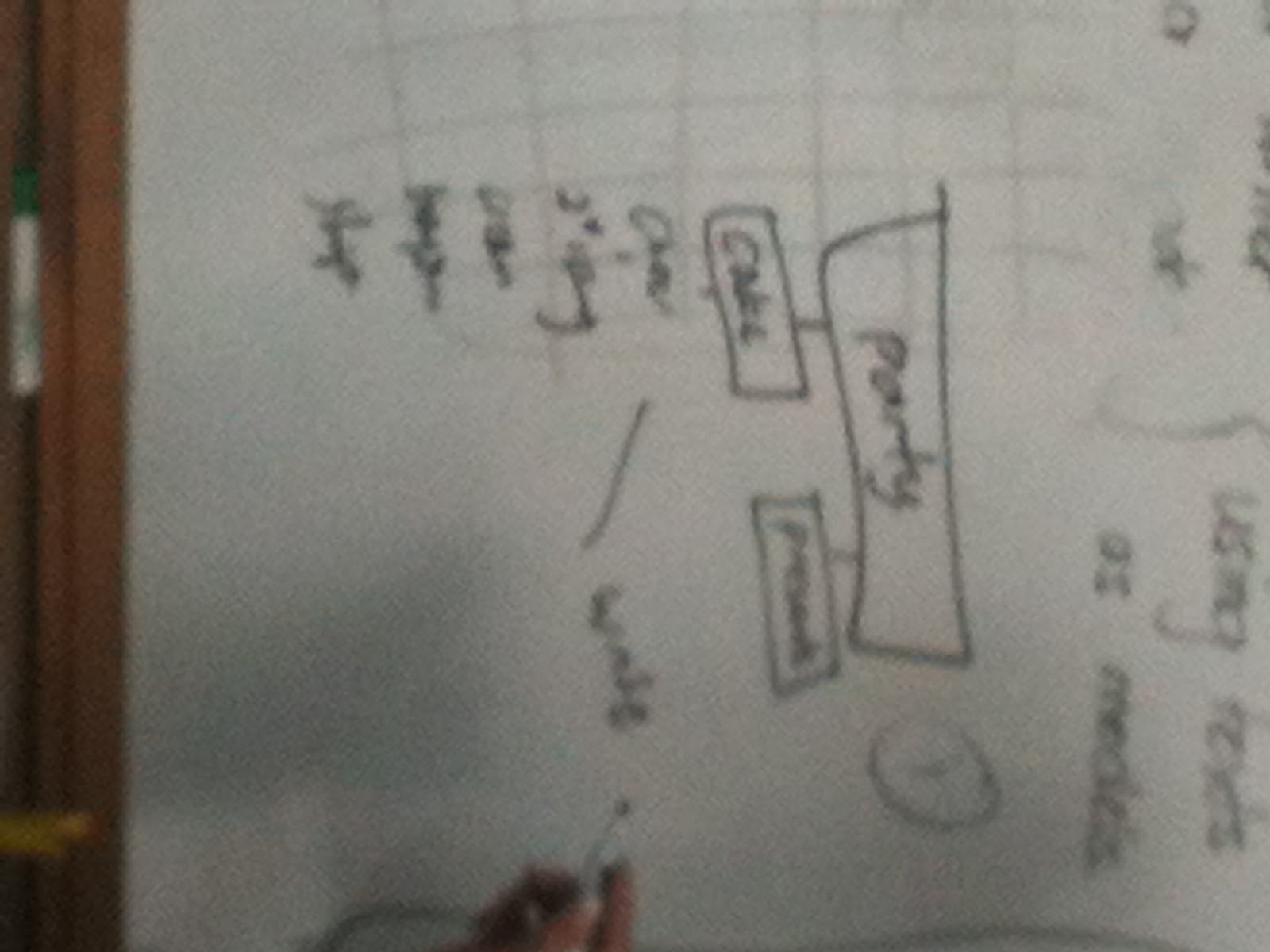
Look at different types of brainstorming techniques. Such Crab or tree.
Party
cake Presents
Choc
3inch icing
cream
boysenberry
ship
decorations
Add writer techniques that chn could use at the bottom of there page. eg. Similies, metaphors, adjectives, etc.
Subscribe to:
Posts (Atom)